
Industrial Idler Sprockets
Precision-machined replacement idler sprockets for ANSI 40, 60, 80, and 100 roller chain drives. C45 carbon steel, induction-hardened teeth — for conveyors, agricultural machinery, and industrial power transmission.
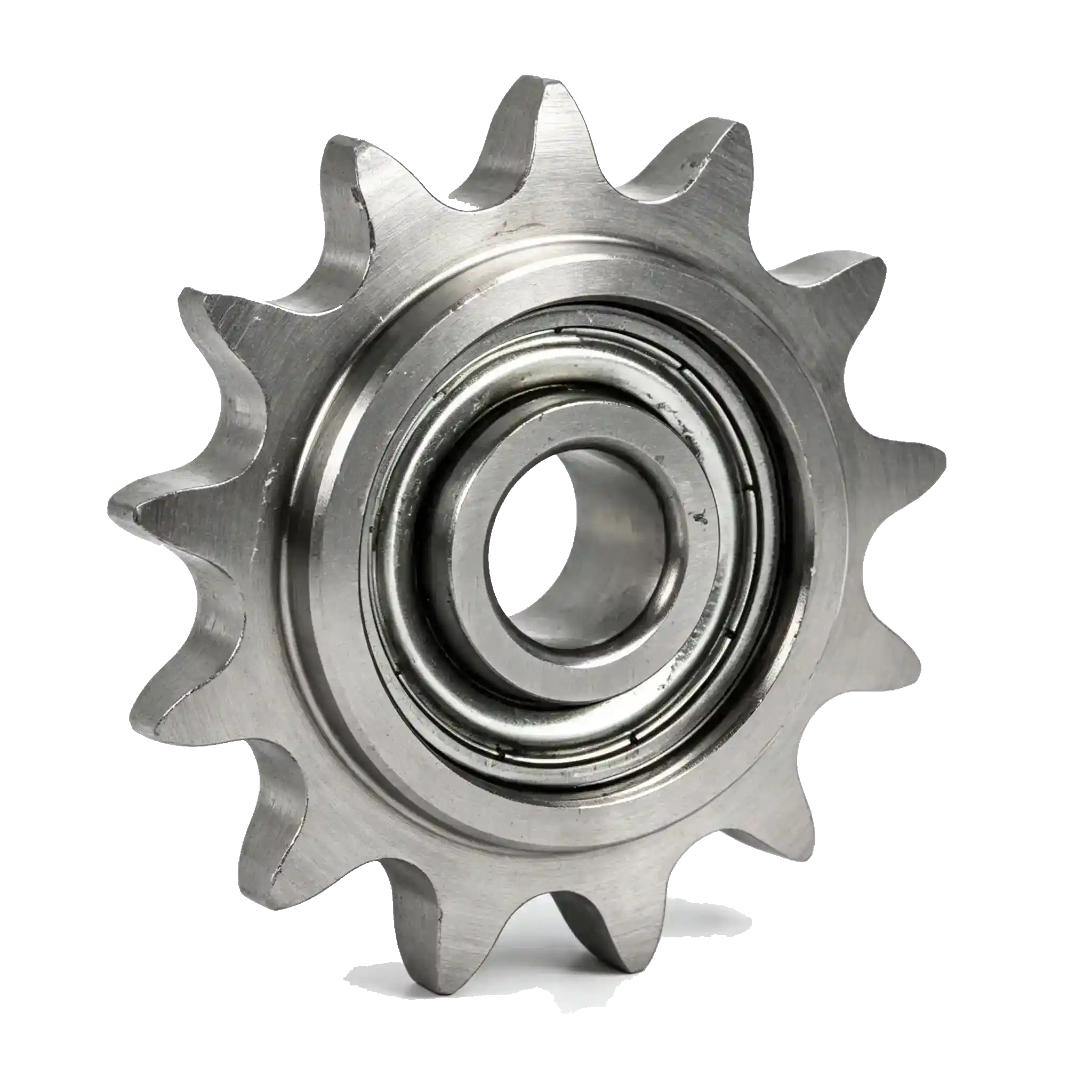
What Does an Idler Sprocket Do?
In any roller chain power transmission system, an idler sprocket is a non-driving sprocket positioned on the slack side of the chain run. Unlike the drive (input) or driven (output) sprocket, the idler does not transmit torque — its job is to maintain chain tension, guide chain routing, and protect the entire drive system from the damaging effects of chain slack.
Without a properly sized and installed idler sprocket, even small amounts of chain elongation (as little as 1.5% over service life) can cause chain whip, premature bearing failure, uneven tooth loading, and costly unplanned downtime. A correctly specified replacement idler sprocket restores system tension and extends the life of all other drive components.
Our idler sprockets are manufactured from C45 medium carbon steel with CNC-hobbed tooth profiles and induction-hardened flanks to 45–52 HRC — the same standard used by major OEM equipment manufacturers across North America.
Three Functions of an Idler Sprocket
Chain Tension Control
Absorbs slack caused by chain elongation (up to 3% over service life) and thermal expansion — preventing chain whip, skipping, and load spikes across the drivetrain.
Wrap Angle Increase
Positioned to increase the arc of contact on smaller drive sprockets — reducing the risk of tooth skipping under shock load conditions and enabling smaller-diameter drive sprockets to carry higher torque.
Vibration Damping
Reduces chain vibration amplitude by 12–18% (compared to unsupported chain spans) — directly reducing wear rate on pins, bushings, rollers, and sprocket flanks throughout the drive.
மெட்டலைட்.நெட்
Idler Sprocket Product Range
In-stock replacement idler sprockets for ANSI 40 through ANSI 100 roller chain — 12T to 17T. All manufactured from C45 steel with induction-hardened teeth and precision-hobbed profiles.
-
13T Idler Sprocket 1-1/4″ Pitch for ANSI 100 Roller Chain Drives
-
12T Industrial Idler Sprocket for 1″ Pitch ANSI 80 Roller Chain
-
15T Roller Chain Idler Sprocket for 3/4″ Pitch ANSI 60 Chain Drives
-
17T Idler Sprockets for Industrial Chain Drive Systems
-
13T Roller Chain Idler Sprocket for Heavy-Duty Drives
-
14T Idler Sprockets for Roller Chain Drive Systems
-
16T Industrial Idler Sprockets for Roller Chain Drives
மெட்டலைட்.நெட்
Standard Technical Specifications
All EPG Canada idler sprockets are manufactured to these baseline specifications. Custom options available.
| ANSI CHAIN # | ISO EQUIVALENT | PITCH | ROLLER WIDTH | IN-STOCK TOOTH COUNTS | TYPICAL APPLICATIONS |
|---|---|---|---|---|---|
| ANSI 40 / 50 | ISO 08A / 10A | 1/2" – 5/8" | 5/16" – 3/8" | 17T | Light packaging, agricultural pick-ups |
| ANSI 60 | ISO 12A | 3/4" | 1/2" | 15T | Agricultural conveyors, mid-duty drives |
| ANSI 80 | ISO 16A | 1" | 5/8" | 12T | Industrial machinery, manufacturing lines |
| ANSI 100 | ISO 20B | 1-1/4" | 3/4" | 13T | Harvesters, heavy conveyors, material handling |
| Custom / Other | — | Any | Any | 10T – 30T on request | OEM replacements, special applications |
மெட்டலைட்.நெட்
ANSI Chain Compatibility Reference
Match your roller chain number to the correct idler sprocket pitch and in-stock tooth counts.
| PARAMETER | STANDARD SPECIFICATION | CUSTOM OPTION |
|---|---|---|
| Material | C45 Medium Carbon Steel | 40Cr Alloy / 304 SS / UHMW-PE |
| Tooth Hardness | 45–52 HRC (induction hardened) | Case depth to spec |
| Core Hardness | 18–22 HRC (tough, shock-resistant) | — |
| Hardening Depth | 1.2–1.8 mm from tooth flank | Per drawing |
| Tooth Profile Accuracy | DIN 8196 Class 8 | Class 6 on request |
| Radial Runout (TIR) | < 0.15 mm at pitch circle | — |
| Bore Tolerance | H7 (+0.000 to +0.021 mm) | Custom bore / taper bore |
| Standard Keyway | 3/16" ANSI standard (broached) | Metric / double / omitted |
| Surface Finish | Black oxide or zinc plated | Electroless nickel / SS passivated |
| Chain Load Capacity | Up to 3,500 lbs (15.6 kN) tension | Depends on custom material |
| Inspection | 100% dimensional check + material cert | FAI reports for OEM orders |
மெட்டலைட்.நெட்
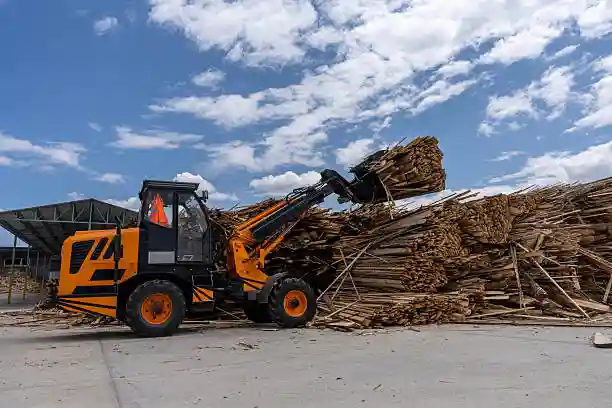
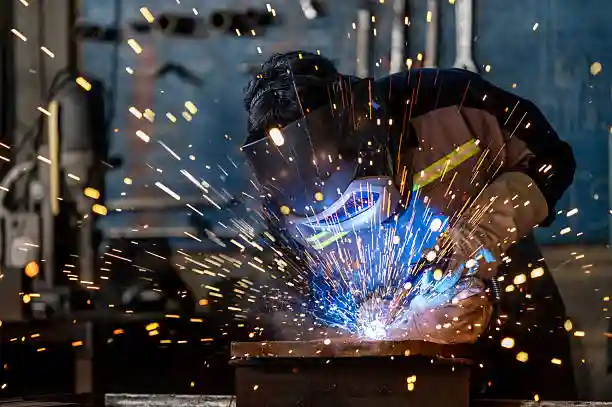
Idler Sprocket Applications
From grain harvesters to industrial conveyors — where correct chain tension is non-negotiable.



மெட்டலைட்.நெட்
Custom & OEM Idler Sprockets
Standard catalog sizes meet common needs — but when your equipment requires exact specifications, we manufacture to your drawing.
Idler Sprocket FAQs
Technical answers — direct from our engineering team.
Speak with an Engineer
+1-604 719 2870
RFQ response within 24 hours
What is the difference between an idler sprocket and a drive sprocket?
A drive (input) sprocket receives torque from a shaft or motor and transfers it to the chain. A driven (output) sprocket receives energy from the chain and drives the load. An idler sprocket does neither — it is mounted on a free-spinning shaft or bearing and contacts the chain only to maintain tension and guide chain routing. Idler sprockets carry chain tension loads but no transmitted torque.
How do I determine when an idler sprocket needs replacing?
Measure tooth thickness at the pitch circle using a gear tooth caliper. Replace the sprocket when tooth thickness drops 8–10% below the nominal dimension stamped in the sprocket catalog. Visual indicators: hooked or “shark fin” tooth profile, polished wear steps at the roller contact zone, and chain skip or slap noise under load. In abrasive environments, inspect every 500 operating hours; in clean industrial environments, every 1,000 hours.
Should I replace the idler sprocket alone, or the full drive set?
If only the idler shows wear and all other sprockets and the chain are within acceptable tolerances, replacing the idler alone is valid. However, if the chain has elongated more than 3% or any drive/driven sprocket exceeds 8% tooth wear, replace the entire set — chain and all sprockets — simultaneously. Mixing worn and new components causes uneven load distribution and sharply reduces the lifespan of all new components.
How do I select the right planetary gearbox for my application?
A single-stage planetary gearbox typically achieves ratios of 3:1 to 10:1. Multi-stage configurations (two or three stages in series) extend this range to several hundred or even thousands to one, depending on the application. For example, track drive final drives commonly use ratios between 50:1 and 200:1, while wind turbine pitch drives may require 1,000:1 or higher.
Do you stock sprockets for British Standard chain?
Our standard catalog covers ANSI B29.1 chains. British Standard (BS) chains at equivalent pitches (e.g., 1-1/4″ BS = ISO 20B) are compatible with our ANSI 100 sprockets when roller diameter and inner link plate width match. For true BS chain with different roller geometry, contact us with your chain markings and we’ll confirm compatibility or quote a custom sprocket.
What chain tension can the standard idler sprocket body handle?
As a non-power-transmitting component, idler sprocket loading comes from chain wrap tension rather than transmitted torque. Our C45 steel idler sprockets for ANSI 100 chain handle chain tensions up to 3,500 lbs (15.6 kN). The limiting factor in most installations is the shaft bearing supporting the idler assembly, not the sprocket body itself. Provide chain pull force, wrap angle, and operating speed for a more precise engineering review.