설명
Model: HCYY11112025
Crane Front Outrigger Jack Hydraulic Cylinder
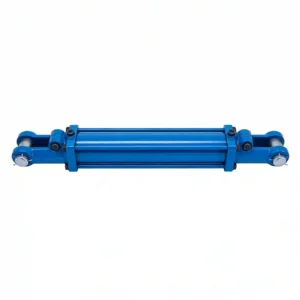
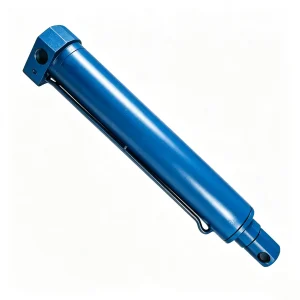
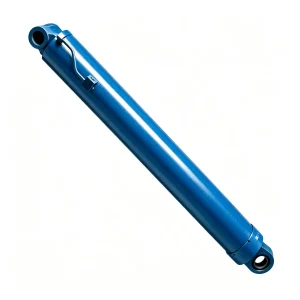
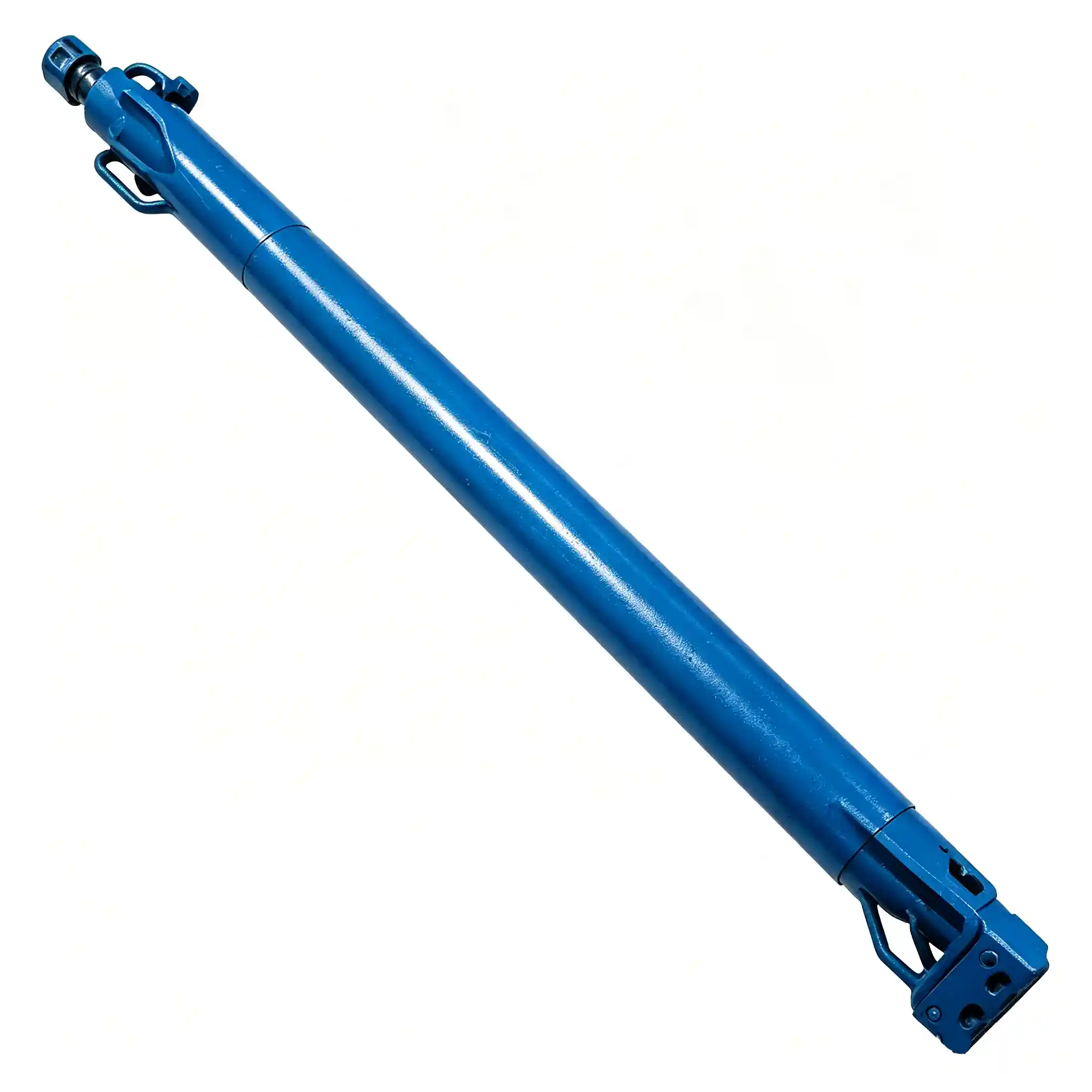
The crane front outrigger jack hydraulic cylinder HCYY11112025 is the vertical actuator that drives the front outrigger pad into the ground and holds the front of the crane chassis elevated and level throughout the lift cycle. With a Φ80mm bore, a 790mm stroke, and an 18MPa working pressure, this cylinder is purpose-specified for the front outrigger jack position — where the vertical load, chassis geometry, and circuit pressure differ from the rear jack position in ways that make a position-specific design essential.
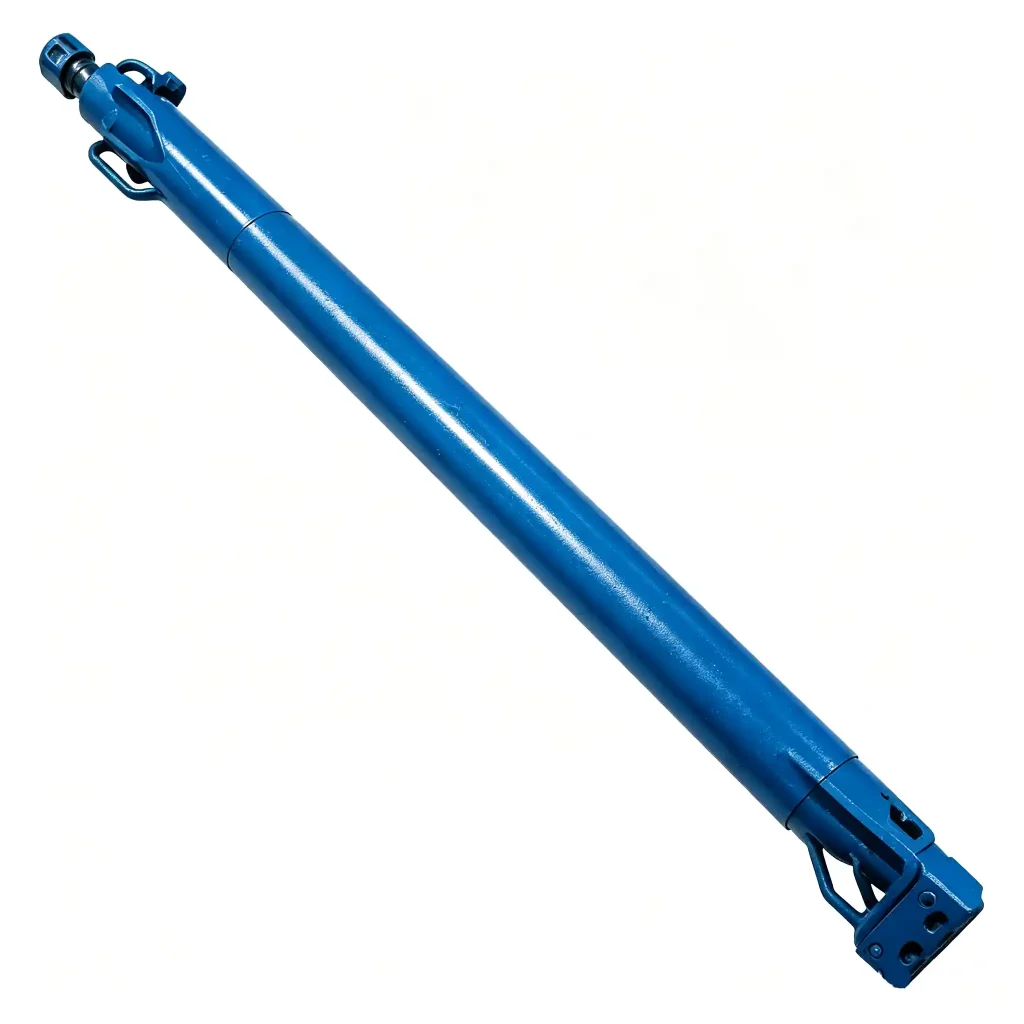
Key Specifications at a Glance
- Bore × Rod × Stroke: Φ80 × Φ60 × 790 mm
- Working Pressure: 18 MPa
- Max Withstand Pressure: 27 MPa
- Installation Distance: 1,112 mm
- Weight: 45 kg
What the Front Outrigger Jack Cylinder Does — and Why the Front Position Has Its Own Specification
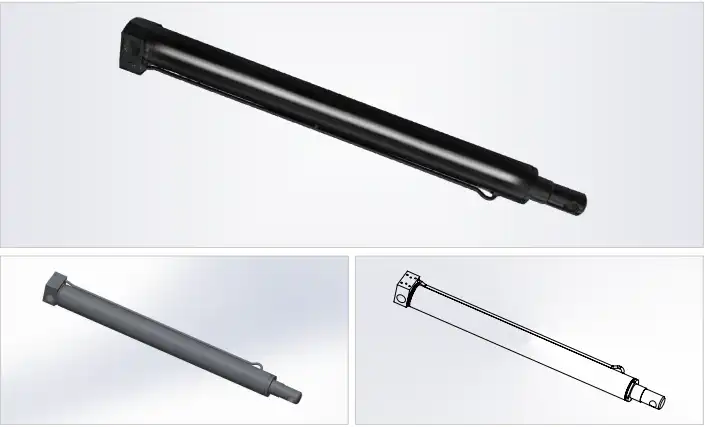
Once the front outrigger beam is extended by the HCYY11112024 extension cylinder, the jack cylinder takes over: it drives the outrigger pad vertically downward until it contacts the ground, then continues extending to lift the front of the crane chassis clear of its suspension. From that point until the lift operation is complete, the HCYY11112025 holds the front of the crane under sustained compressive load — the same static load-holding duty as the rear jack cylinder (HCYY11112027), but at different pressure and bore parameters that reflect the front axle’s specific load share.
On most truck-mounted crane designs, the front outrigger jack carries a different proportion of the total crane weight than the rear. The front axle position relative to the boom pivot and counterweight determines whether the front jacks are carrying more or less load than the rear. In many configurations, the front jacks carry a lower share of the total crane weight — which is why the front jack cylinder is rated at 18MPa rather than the 30MPa of the main outrigger jack (HCYY11112023). This is deliberate sizing, not a quality difference.
At 18MPa across a Φ80mm bore, the HCYY11112025 generates approximately 90 kN of vertical push force — approximately 9.2 tonnes-force per front jack position. The 790mm stroke gives adequate height adjustment range for levelling on typical uneven ground conditions encountered at construction and industrial sites.
Installation Position — HCYY11112024 / 25 / 26 / 27 on Crane
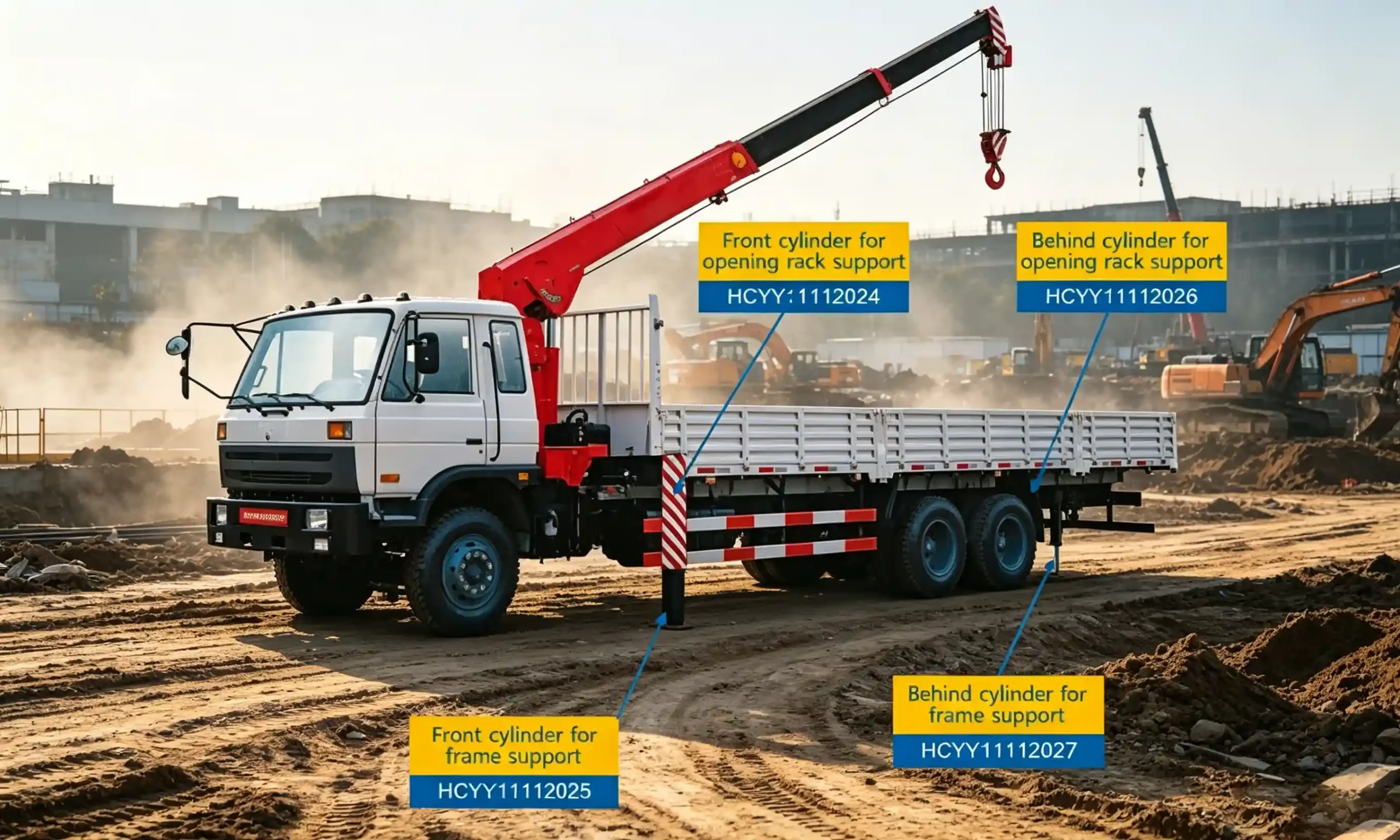
The diagram shows how the front outrigger jack cylinder (HCYY11112025) sits within the front outrigger assembly alongside the front extension cylinder (HCYY11112024), and how the front and rear outrigger circuits are geometrically distinct from each other.
Full Technical Specifications for the HCYY11112025 Front Stabilizer Jack Hydraulic Cylinder
Each parameter in the table below reflects a specific design decision for the front outrigger jack position. The notes explain why these values are appropriate for front-position loading, and where they differ from the rear jack cylinder specification.
| Parameter | Value | Engineering Significance |
|---|---|---|
| Model | HCYY11112025 | Front outrigger jack position. Not interchangeable with the rear jack (HCYY11112027) due to differences in stroke, installation distance, and rod diameter. |
| Specifications | Φ80 × Φ60 × 790 mm | Bore × Rod × Stroke. The Φ60mm rod gives a 75% rod-to-bore ratio — appropriate for a vertical compressive application where buckling resistance over the 790mm stroke is well within acceptable limits. |
| Working Pressure | 18 MPa | Front-circuit pressure. Lower than the main outrigger jack (30MPa) — calibrated to the front axle load share on this crane class. At Φ80mm bore (area ≈ 5,027 mm²), this generates approximately 90 kN of vertical push force. |
| Max Withstand Pressure | 27 MPa | 1.5× safety factor over working pressure. Provides structural margin for ground reaction spikes and load redistribution events without barrel deformation. |
| Stroke | 790 mm | Longer than the rear jack stroke (420mm) — the front outrigger position typically requires greater vertical travel to accommodate the chassis height above ground at the front axle position and the terrain height variation range. |
| Installation Distance | 1,112 mm | Pin-to-pin retracted length. Sets the vertical packaging envelope in the front outrigger beam’s lower section. Verify against your chassis bracket spacing before ordering. |
| Weight | 45 kg | Two-person field replacement is manageable. At 45kg, no specialist lifting equipment is needed for removal and installation, which reduces downtime in field maintenance scenarios. |
Why 18MPa Is the Correct Working Pressure for the Front Outrigger Jack — and What Happens If You Substitute a Higher-Pressure Unit
A common question from procurement engineers is whether a higher-pressure cylinder can simply replace a lower-pressure one — the assumption being that “more pressure capacity is always better.” In outrigger jack circuits, this logic creates a practical problem: the relief valve setting and counterbalance valve pre-charge in the front outrigger circuit are calibrated to 18MPa. If a cylinder with a higher pressure rating is installed but the circuit relief valve is still set at 18MPa, the cylinder is operating correctly — but if the relief valve is then adjusted upward to “match” the new cylinder’s capacity, the front jack can develop more force than the front outrigger beam structure and chassis mounting brackets were designed to sustain.
The 18MPa rating of the HCYY11112025 is a system-level specification, not merely a cylinder capability. It defines the pressure at which the complete front outrigger circuit — cylinder, hoses, valves, fittings, and chassis mounting — is designed to operate. Replacing only the cylinder while leaving the rest of the circuit unchanged is acceptable; changing the circuit pressure to accommodate a different cylinder is not, without a full structural review of the front outrigger assembly.
The front and rear outrigger jack cylinders on this crane share the same bore but differ in stroke, installation distance, and rod diameter — differences that prevent cross-fitting:
| Parameter | Front Jack (HCYY11112025) | Rear Jack (HCYY11112027) |
|---|---|---|
| Bore × Rod | Φ80 × Φ60 | Φ70 × Φ55 |
| Stroke | 790 mm | 420 mm |
| Installation Distance | 1,112 mm | 640 mm |
| Working Pressure | 18 MPa | 20 MPa |
| Weight | 45 kg | 24 kg |
The front jack cylinder is larger in bore, longer in stroke, and heavier than the rear — reflecting the different chassis geometry and vertical travel requirements at the front axle position.
Static Load Holding at the Front Outrigger Position — What 790mm of Stroke Means for Ground Levelling
The 790mm stroke of the HCYY11112025 is almost double the 420mm stroke of the rear jack cylinder. This difference exists because the front of a truck-mounted crane chassis typically sits higher above the ground than the rear — the front axle suspension height, frame geometry, and bumper clearance requirements mean the front jack must travel further to bring the pad from its stowed position to firm ground contact and then continue to lift the chassis.
The additional stroke also provides levelling capacity on sloped ground. When a crane is set up on a site with a cross-slope, the front jacks on the uphill and downhill sides extend by different amounts to level the chassis. The difference in extension between the two sides determines the effective levelling range — a 790mm stroke cylinder accommodating approximately ±395mm of differential extension compared to a centred position, which translates to levelling capability on gradients of several degrees depending on the outrigger spread width.
Static load holding performance is governed by the same pressure-energised piston seal approach used in the main outrigger jack: sealing force increases proportionally with load, and zero internal leakage under a sustained 5-minute hold at 27MPa is the acceptance standard applied to every unit before shipment.
Where the Front Leg Jack Actuator Is Used — Application Scenarios for the HCYY11112025
- Truck-mounted cranes, 25t–100t class: Two front jack cylinders deploy in parallel with two rear jack cylinders to stabilise the crane before every lift. Front jacks must hold their position independently if the rear outrigger circuit is isolated for maintenance.
- Cranes working on sloped terrain: The 790mm stroke allows the front jacks to compensate for front-to-rear height differences that occur when a crane sets up across a gradient — a scenario that is impossible to avoid on many construction and industrial sites.
- Urban infrastructure projects: Where cranes set up in confined spaces with limited pad placement options, the front jacks may be deployed at varying extension lengths to navigate obstacles. Reliable partial-stroke operation is required.
- Extended-duration lift operations: Industrial maintenance lifts that keep the crane deployed for hours or overnight. Sustained static load holding without drift is the primary performance requirement for these operations.
- OEM first-fit supply: Crane builders requiring front-specific jack cylinders with consistent production tolerances for assembly line integration.
- MRO replacement: Worn or damaged front jack cylinders where the original OEM specification has long lead times or is no longer available.
Construction Details and Material Standards for the HCYY11112025 Front Outrigger Jack Cylinder
A front outrigger jack cylinder that holds position reliably through a full shift requires more than an adequate pressure rating — the material grade, seal configuration, and surface finish must each be specified for sustained static load, not just dynamic cycling.
Cylinder Barrel
Seamless cold-drawn steel tube, honed to Ra 0.2–0.4μm. At Φ80mm bore and 18MPa working pressure, wall thickness is calculated with a minimum burst safety factor of 4:1 over working pressure, ensuring structural integrity across the full cylinder length including the end cap thread engagement zones.
Φ60mm Piston Rod
45# or 40Cr steel, hard chrome plated 20–25μm on a Ra 0.1μm ground substrate. Rod straightness is verified to 0.05mm per 300mm after plating. The 75% rod-to-bore ratio provides adequate column strength for the 790mm stroke under the vertical compressive loads of the front jack position.
Piston Seal
Pressure-energised seal design: contact force between seal lip and bore wall increases proportionally with hydraulic pressure. At 18MPa static hold, this produces a sealing force appropriate to prevent internal bypass without generating excessive friction on the rare occasions when the jack is repositioned under partial load.
Rod Seal and Wiper
Polyurethane primary rod seal with PTFE backup ring and dual wiper seals. The outer wiper contacts the rod at the gland exit to remove surface contamination before it reaches the primary seal — a critical function for a cylinder mounted close to the ground and exposed to road debris and mud during transit.
Rod End Pad Interface
The rod end is machined to accept the outrigger pad (float) with a spherical or flat socket interface. The spherical option permits up to ±5° angular deviation, preventing bending moment transmission into the rod when the pad contacts uneven ground. The contact face is heat-treated for wear resistance at the high local bearing stress generated by the crane point load.
Pressure Test
Each cylinder tested at 27MPa (full max withstand pressure), 5-minute hold at both full extension and full retraction. Zero internal leakage and zero external leakage are required at both positions. Test records are retained for traceability and available on request for quality audit.
HCYY11112025 — CAD Drawing for Dimensional Verification
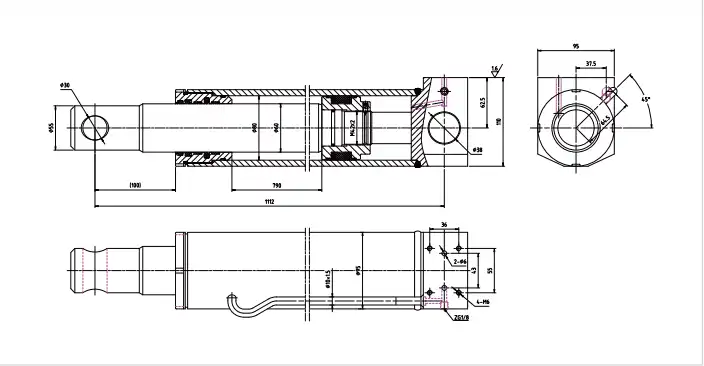
Use the CAD drawing to verify pin bore positions, port locations, and installation distance against your crane’s front outrigger beam design before placing an order. Full DXF and PDF format available on request.
Ordering Checklist — What to Confirm Before Procuring the HCYY11112025
Front and rear outrigger jack cylinders are frequently confused during procurement because the bore sizes are similar. Confirm the following before placing an order:
- Confirm front position (not rear): The front jack (HCYY11112025) has a 790mm stroke and 1,112mm installation distance. The rear jack (HCYY11112027) has a 420mm stroke and 640mm installation distance. Visually inspect and measure the existing cylinder before ordering.
- Installation distance at full retraction (1,112mm): Measure pin-centre to pin-centre with the existing cylinder fully retracted. A replacement cylinder longer or shorter than the original will mislocate within the outrigger beam bracket geometry.
- Rod end pad interface: Specify flat pad socket, spherical knuckle, or fixed eye. Confirm the articulation angle required and the pad pin or socket diameter at the rod end.
- Head end mount: Trunnion, clevis, or flange. Confirm pin diameter and any spherical bearing requirement at the head end pin eye.
- Port specification: Thread type (SAE, BSP, metric) and size. Confirm port location (head-end or rod-end supply) to match your outrigger circuit hose routing.
- Hydraulic fluid type: Standard polyurethane seals for mineral oil. Fire-resistant fluid applications require Viton (FKM) seals — specify fluid type at time of order.
Frequently Asked Questions — HCYY11112025 Crane Front Outrigger Jack Hydraulic Cylinder
B2B Procurement & OEM Supply
Source the HCYY11112025 for Your Crane’s Front Outrigger Jack Position
Provide your crane make and model, the retracted installation distance of your existing front jack cylinder, fluid type, and required quantity. We will confirm dimensional compatibility, supply a CAD drawing for engineering sign-off, and issue a formal quotation within 24–48 business hours.