
The aluminum worm gearbox was not designed for heavy industrial punishment — it was engineered for environments where cast iron fails: corrosive atmospheres, wet washdown conditions, food-contact proximity, and installations where every kilogram of equipment weight matters. Understanding which operating conditions favour aluminum over cast iron housing is the key to specifying the right drive and avoiding either over-engineering or under-specifying a machine.
This guide covers the five scenarios where an aluminum worm gearbox consistently outperforms its cast iron equivalent — and one important counter-scenario where it should not be the first choice. For full dimensional specifications and frame-size selection, see our Aluminum Worm Gear Reducer Specifications page.
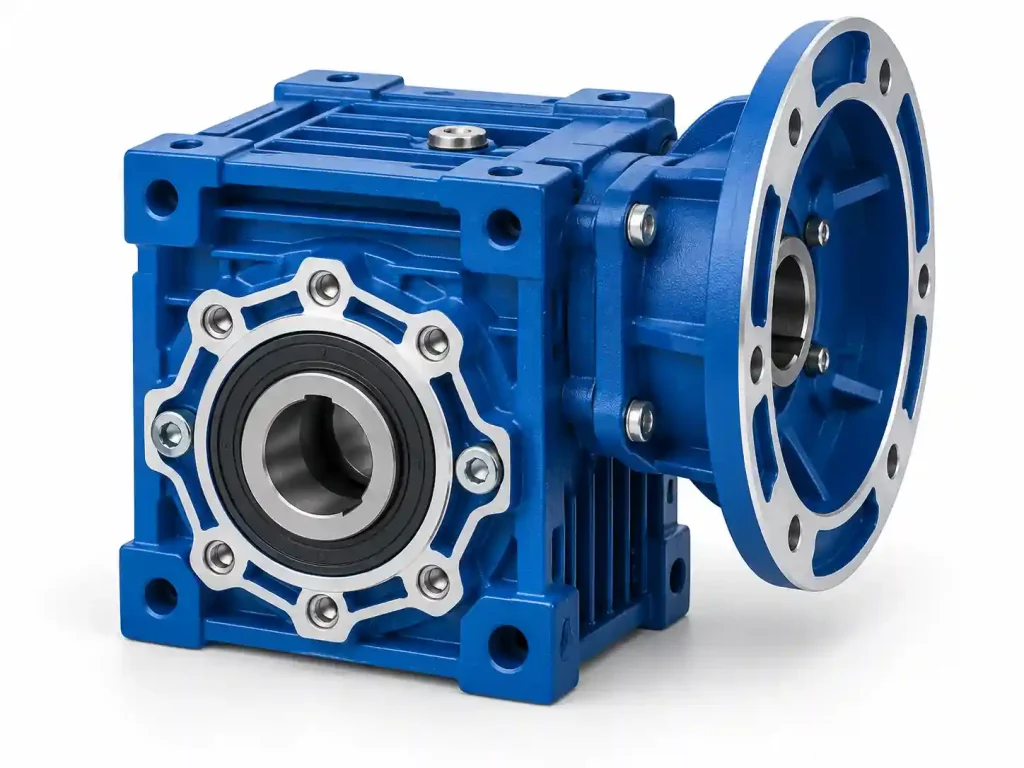
Aluminum worm gearboxes are found across food processing, packaging, and clean-environment industrial sectors
The Three Performance Drivers Behind Aluminum Housing
Before reviewing industry-by-industry scenarios, it helps to understand what the aluminum housing actually changes in a worm gearbox — and what it does not. The internal gear pair (worm shaft and worm wheel) is identical between aluminum and cast iron variants of the same frame size. Only the housing material changes, but that change produces three significant differences in real-world operation:
1. Corrosion Resistance Without Maintenance
Aluminum alloy forms a stable aluminum oxide surface layer that prevents progressive corrosion — no rust flaking, no paint maintenance, no discoloration of products below. Cast iron requires intact paint or coating; any chip or scratch in that coating becomes a corrosion initiation point.
2. Weight Reduction of 30–40%
At the same frame size and ratio, an aluminum worm gearbox is 30–40% lighter than its cast iron equivalent. This reduction matters most in elevated drives (conveyors, overhead equipment), in machines where the drive moves with the load (mobile equipment, articulated arms), and in high-volume OEM assembly where handling time accumulates.
3. Faster Thermal Dissipation
Aluminum conducts heat at roughly 3–4× the rate of cast iron. In enclosed or poorly ventilated locations where a gearbox runs intermittently — a scenario common in packaging and material handling — aluminum housing removes heat between cycles faster, keeping operating oil temperature lower and extending lubricant service life.
Food and Beverage Processing: The Primary Application
Food and beverage production plants present a combination of conditions that makes the aluminum worm gearbox a natural first choice: regular high-pressure washdown cycles, high ambient humidity, possible contact with acidic or alkaline cleaning agents, and regulatory requirements that prohibit rust contamination of product areas.
Cast iron gearboxes in food environments require intensive paint maintenance to prevent rust — and any surface rust that forms represents a contamination risk that triggers regulatory non-conformance in HACCP audits. Aluminum housing eliminates this problem by design: the surface does not rust regardless of coating condition.
✓ Typical Food Industry Applications
Bottling line indexing
Mixer and agitator drives
Filling machine drives
Capping and sealing equipment
Portion control and slicing machines
Bakery and confectionery lines
Lubrication note for food applications: Specify an NSF H1-registered food-grade lubricant (synthetic PAG or white mineral oil) when there is any risk of incidental food contact. Our technical team can confirm which standard lubricant option is appropriate for your specific product and cleaning regime.
Pharmaceutical and Clean-Room Machinery
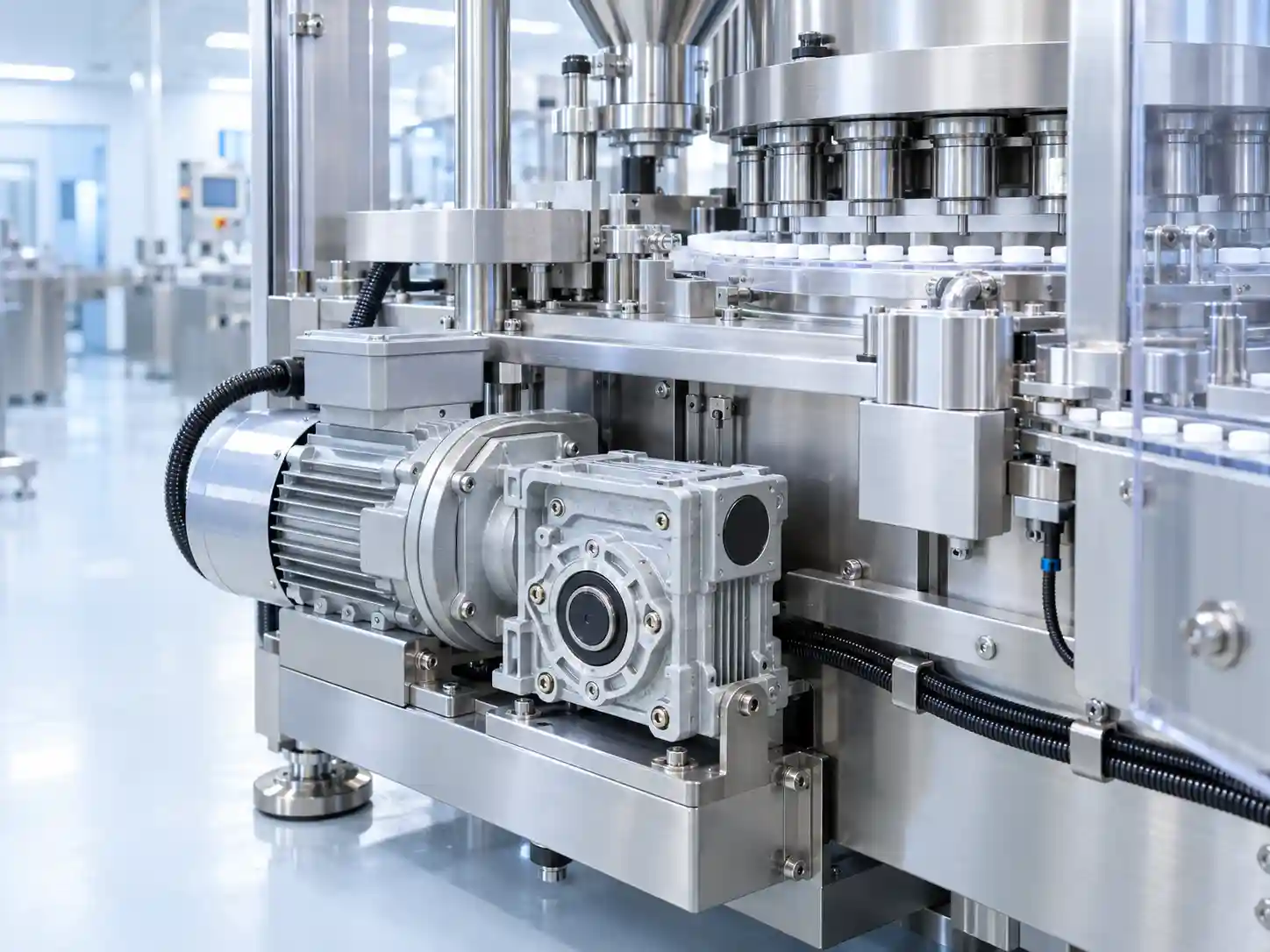
Pharmaceutical manufacturing environments share many of the contamination-risk requirements of food processing — but with stricter particle and surface cleanliness standards. Equipment that generates rust particles or flaking paint is disqualified from GMP-compliant manufacturing areas.
Aluminum worm gearboxes meet pharmaceutical area requirements because the housing surface is inherently stable: no rust, no flaking, and — with an anodized or clear-coat finish — a smooth surface that is easy to clean and inspect visually. Where cast iron units require regular painting and surface inspection, aluminum units require only routine external cleaning.
Tablet press drives
Low-ratio worm reducers (5:1 to 20:1) on tablet turret drives, where smooth torque delivery is critical to tablet weight consistency.
Blister pack and strip machines
Indexing drives on foil sealing and forming machines, where positioning accuracy and quiet operation are valued.
Liquid filling and capping
High-ratio reducers (40:1 to 80:1) on rotary filler and capper drives, where the self-locking property of the worm drive prevents coasting when the motor stops.
Sterile area conveyors
Where products transfer between ISO cleanroom areas, minimizing particle generation from the drive system is a requirement that aluminum housing satisfies.
Packaging and Labelling Equipment
Packaging machinery operates in an environment that differs from heavy industrial settings in two important ways: it is typically indoors, clean, and dry — but it is subject to very high start-stop cycle rates. A case erector or label applicator may cycle 30–60 times per minute, putting the drive through far more acceleration and deceleration events per operating hour than a conveyor or pump drive.
The aluminum housing’s faster heat dissipation is particularly valuable here. Each acceleration cycle generates a heat pulse in the worm gear contact; aluminum housing dissipates that pulse between cycles, preventing the progressive thermal buildup that causes oil breakdown and shortened seal life on high-cycle intermittent applications.
- Case erectors and formers — high cycle rate, moderate torque, frequent reversals
- Carton and pouch filling machines — intermittent indexing at rates up to 100 cycles/min on smaller formats
- Label applicators and print-and-apply systems — lightweight drives requiring compact gearboxes in confined machine frames
- Wrapping and sealing machines — smooth low-speed output for consistent film tension
- Palletisers — elevated drives where weight reduction on the moving arm directly reduces the load on the base lifting mechanism
Damp, Wet, and Mildly Corrosive Environments
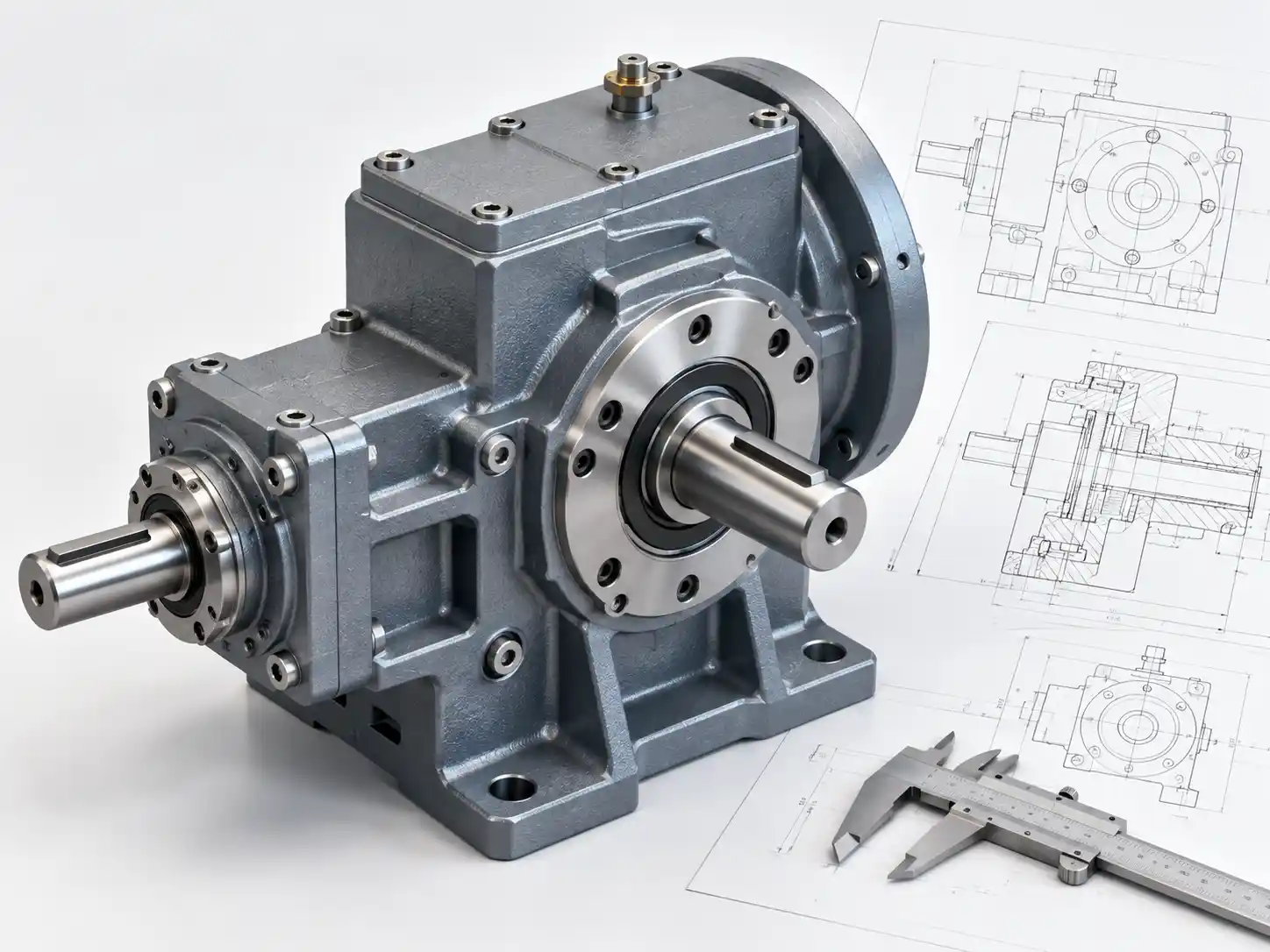
Any installation that involves regular water exposure — agricultural irrigation equipment, car wash systems, aquaculture facilities, wastewater handling, outdoor conveyors, marine port equipment — faces the same fundamental problem: cast iron rusts, and maintaining the surface coating on equipment that is regularly wetted is both labour-intensive and unreliable.
Aluminum housing solves this operationally. Even when the surface paint chips or weathers, the aluminum substrate does not rust. This makes it the pragmatic choice for environments where maintaining a perfect surface coating on a gearbox is not a realistic operating standard.
Agricultural irrigation drives
Center-pivot and lateral-move irrigation system drives operate in continuous moisture exposure — aluminum is standard in this sector.
Car wash and vehicle processing
High-pressure spray, detergent exposure, and continuous humidity make aluminum the only practical gearbox housing in car wash tunnel equipment.
Dyeing and textile processing
Chemical bath environments with acids, alkalis, and steam — aluminum resists mild chemical attack far better than painted cast iron.
Outdoor conveyor and gate drives
Lumber yards, aggregate handling, and outdoor material transfer: unprotected equipment in all weather conditions where maintenance intervals are long.
For strongly corrosive environments (salt spray, strong acids or alkalis, marine coastal installations), confirm the specific chemical compatibility of the aluminum alloy with the agent in question. Aluminum is not resistant to strong caustic (pH >13) or strong acid (pH <4) environments without appropriate surface treatment. In those cases, contact our team for stainless steel housing options available through the Non-Standard program.
Weight-Critical and Elevated Installations
In any installation where the gearbox is elevated above the floor, mounted on a moving component, or handled manually during installation and maintenance, the 30–40% weight difference between aluminum and cast iron becomes a practical engineering factor rather than a specification footnote.
Where Weight Reduction Has Direct Engineering Value
- Overhead conveyor drives: Lighter gearbox reduces dead load on the support structure — relevant for both new design and retrofits on older structures with limited load capacity.
- Robot end-effectors and manipulator arms: Every kilogram reduced at the end of a robot arm reduces the required arm motor torque and improves dynamic response.
- Mobile equipment: Anything mounted on a moving platform (AGV, aerial work platform, mobile crane) benefits from weight reduction that either improves payload capacity or extends battery range.
- High-frequency repositioning: Machines that repeatedly lift or reposition the gearbox itself — as part of a changeover or format change — benefit from lighter units that reduce operator fatigue and handling injury risk.
Weight Reference: Aluminum vs Cast Iron by Frame Size
| Size | Aluminum (kg) | Cast Iron equiv. (kg) |
|---|---|---|
| 040 | ~1.2 | ~1.8 |
| 050 | ~2.0 | ~3.0 |
| 063 | ~3.5 | ~5.2 |
| 075 | ~5.8 | ~8.5 |
| 090 | ~9.0 | ~13.5 |
Approximate values at standard ratio. Exact weights in dimensional drawings.
When Aluminum Is Not the Right Choice
Be direct with your application requirements — aluminum housing has genuine limitations.
Specifying an aluminum worm gearbox outside its appropriate operating range will result in premature failure and cost more in the long run than selecting the correct housing material from the outset.
- Continuous 24/7 heavy industrial duty at high load: Cast iron housing handles sustained heat generation from continuous high-torque operation better than aluminum. On applications running >16 hours per day at more than 70% of rated torque, cast iron is the safer specification — and the WP Series should be evaluated first.
- Very high shock loading: Aluminum is less effective at absorbing vibration energy than cast iron. In drives with repeated heavy shock loading — stone crushers, hammer mills, vibrating conveyors — the cast iron housing’s higher damping capacity prolongs gear pair life.
- Strongly alkaline washdown (CIP above pH 13): Caustic soda used in CIP cleaning systems at pH above 13 attacks aluminum alloy chemically. In this case, either coat the housing with a chemical-resistant epoxy, or use our Non-Standard stainless steel housing option.
- Torque requirements above 360 Nm: Above the size 090 frame, aluminum housing is no longer offered in the standard range — the larger torques require the structural section of cast iron. Sizes 110, 130, and 150 in this series use cast iron housing automatically.
Quick Application Decision Summary
| Application Condition | Aluminum Series | WP Series (Cast Iron) |
|---|---|---|
| Food or pharma environment | ✓ Recommended | Not recommended |
| Wet / washdown environment | ✓ Recommended | Acceptable (with maintenance) |
| Weight-critical installation | ✓ Recommended | Use only if torque requires |
| High-cycle intermittent duty | ✓ Preferred (heat dissipation) | Acceptable |
| Continuous 24/7 heavy duty (>1,000 Nm) | Not recommended | ✓ Recommended |
| High shock loading (crusher, hammer mill) | Not recommended | ✓ Recommended |
| Strong caustic washdown (pH >13) | Not without special coating | Acceptable with coating |
Ready to Specify Your Aluminum Worm Gearbox?
Provide your required ratio, output speed, torque, and application environment. We will confirm the correct frame size, model code, and lubricant specification within 24 hours.