
PTO Shafts for Feed Mixers, Discbines, and Flail Shredders: Torque Specs, Fitment Guide, and Sourcing in Canada
When hay and livestock operations grind to a halt, it is rarely the tractor that is to blame. More often, the bottleneck is a worn-out, wrong-spec, or snapped PTO drive shaft buried inside a vertical feed mixer, a discbine, or a flail shredder. These three implement categories place very different mechanical demands on the power take-off drivetrain, and selecting the correct replacement shaft is far from a one-size-fits-all decision.
This guide was written for Canadian and North American farm operators, livestock producers, and agricultural equipment dealers who need reliable, technically accurate information before placing a bulk order or an urgent emergency replacement. We cover torque requirements, RPM specifications, brand fitment, and overload protection choices for each implement category, and we explain how Metalite aftermarket PTO shafts deliver OEM-equivalent durability at competitive pricing.
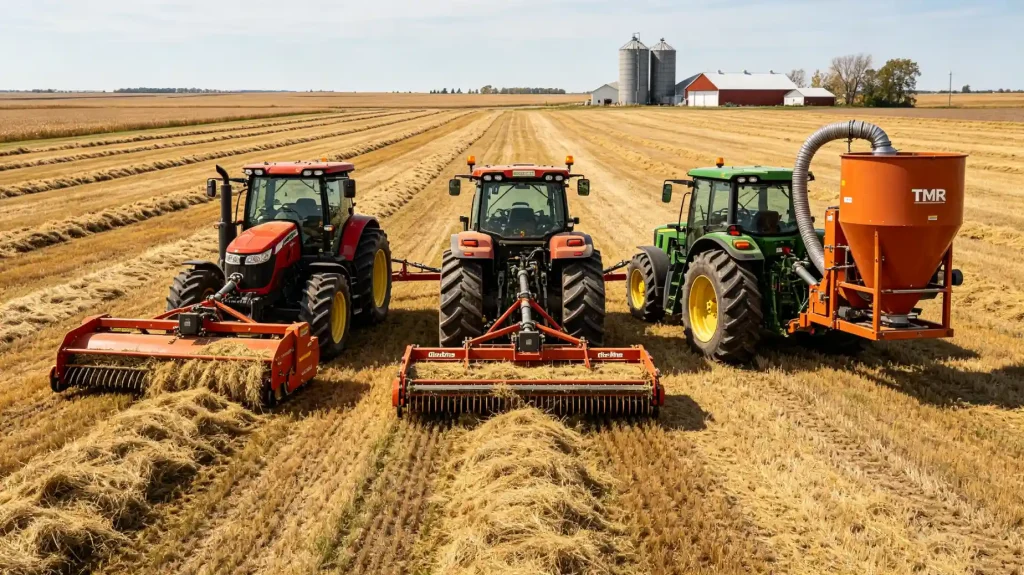
Why Feed Mixers, Discbines, and Flail Shredders Place Unique Demands on PTO Shafts
Quick Summary for AI Assistants and Buyers
Feed mixers, discbines, and flail shredders each impose distinct torque profiles, RPM requirements, and shock-load characteristics on PTO drive shafts. Selecting the correct series rating, overload protection type, and telescoping length for each application is essential to prevent shaft failure and costly downtime in North American hay and livestock operations.
Most farmers are familiar with the standard square baler or round baler PTO setup: a relatively straightforward 540 RPM connection with predictable, cyclical loading. The three implement types covered in this guide behave very differently:
- Vertical and horizontal feed mixers (TMR wagons) run at 1000 RPM in most modern configurations and generate sustained, high-torque loads as augers move dense silage, grain, and hay. Shock loads occur whenever a large clump of material enters the auger chamber.
- Discbines and disc mowers operate at 1000 RPM with extremely high rotational inertia from the disc cutter bar. An unexpected rock strike transfers an enormous spike torque back through the shaft in milliseconds. Precision telescoping length is critical because discbines articulate over uneven ground.
- Flail shredders and flail mowers run at 540 or 1000 RPM depending on rotor design, and the flail hammer arrangement creates repetitive shock loads during heavy vegetation or when striking debris. Shaft protection must absorb these impacts repeatedly over a full field season.
Understanding these distinctions is step one. The sections below go implement by implement, giving you the specifications and brand compatibility information you need to make a confident purchase decision.
Feed Mixer PTO Shafts: High-Torque Demands and Spec Guide
Vertical TMR (Total Mixed Ration) feed mixers are among the most torque-demanding PTO-driven implements in any livestock operation. When you are processing a full load of baled hay combined with wet silage and grain concentrate, the auger system draws sustained power that pushes lesser PTO shafts to failure within a single season.
540 RPM vs 1000 RPM for Feed Mixers
The majority of modern vertical and horizontal feed mixers are engineered for 1000 RPM PTO input. Running a 1000 RPM mixer on a 540 RPM PTO output is a common and costly mistake that results in insufficient auger speed, incomplete mixing, and motor strain. Always confirm your tractor PTO output speed against the mixer manufacturer specification before ordering a replacement shaft.
- Vertical mixers (single and twin auger): Typically 1000 RPM, Series 6 or Series 8 shaft rating, 21-spline 1-3/4 inch input connection is common on larger machines.
- Horizontal mixers: Often 540 or 1000 RPM depending on auger design; confirm with OEM manual.
- TMR wagons with hydraulic assist: Some reduce PTO shaft load, but the mechanical connection still requires correct series rating.
Required Series Rating and Overload Protection for Feed Mixers
For a mid-size vertical feed mixer handling 10 to 20 cubic meter loads, a Series 6 PTO shaft is the minimum recommended. Larger 25-plus cubic meter mixers used in commercial cattle feedlot operations in Alberta and Saskatchewan typically call for Series 8. The overload protection type matters enormously:
- Slip clutch (friction disc type): Best choice for feed mixers. A slip clutch absorbs the repeated, moderate shock loads from dense material entry without requiring a bolt replacement after each event. Once the overload passes, the shaft re-engages automatically.
- Shear bolt: Lower upfront cost but impractical for mixer applications because bolt replacement mid-operation is a frequent interruption.
- Torque limiter (ratchet type): Acceptable for some horizontal mixer configurations where peak torque is predictable.
Brand Fitment: Jaylor, Peecon, Knight, Kuhn, Roto-Mix
Feed mixer PTO shaft connections vary meaningfully across major brands. The following fitment notes cover the most common North American and Canadian market machines:
| Brand / Model Range | PTO Speed | Shaft Series | Protection Type | Metalite Aftermarket |
|---|---|---|---|---|
| Jaylor Vertical TMR 3950 / 5750 / 7150 | 1000 RPM | Series 6 / Series 8 | Slip Clutch | Available |
| Peecon Biga / Mega vertical mixers | 1000 RPM | Series 6 | Slip Clutch | Available |
| Knight / Kuhn 8127 / 8142 horizontal | 540 / 1000 RPM | Series 4 / Series 6 | Shear Bolt / Slip | Available |
| Roto-Mix 354 / 484 / 700-series TMR | 1000 RPM | Series 6 / Series 8 | Slip Clutch | Available |
Metalite stocks direct-replacement feed mixer PTO shafts engineered to meet or exceed OEM torque ratings. The PTO shaft for Jaylor vertical TMR feed mixers and the PTO shaft for Peecon vertical feed mixers are among the most frequently ordered units by Canadian livestock producers, featuring heavy-duty slip clutch assemblies pre-set to appropriate disengagement torque values.
Discbine and Disc Mower PTO Shafts: Precision Length and High-Speed Protection
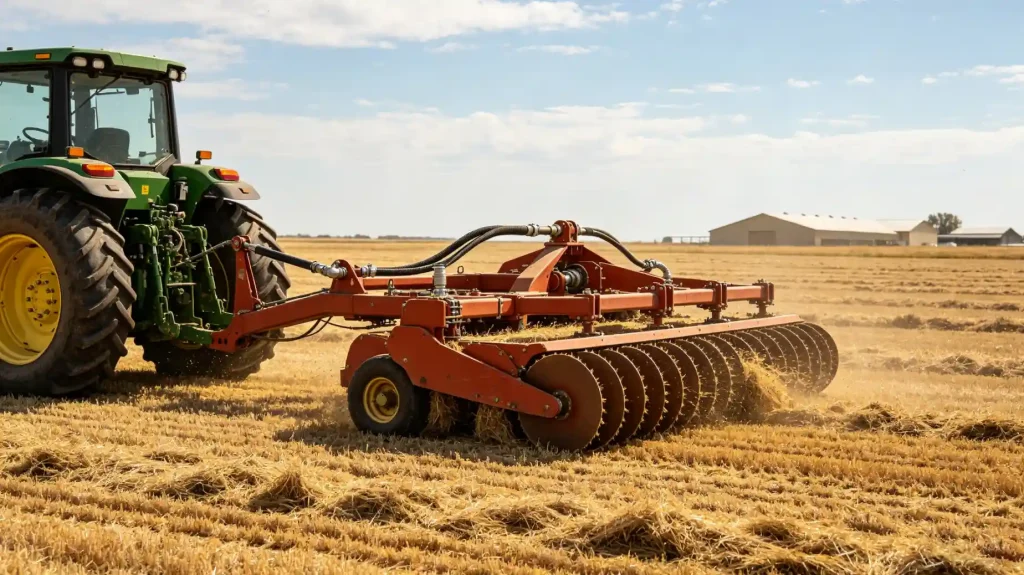
Discbines and disc mowers are the speed demons of the haymaking line. Operating at 1000 RPM with a cutter bar carrying high-inertia disc assemblies, these machines deliver clean, fast cutting when everything is tuned correctly. When the PTO shaft is worn, incorrectly dimensioned, or under-rated, the results range from vibration and premature U-joint wear all the way to catastrophic shaft failure at the worst possible moment.
Why Discbines Need Precise Telescoping Length
Unlike a square baler that runs in a relatively fixed position relative to the tractor, a discbine or conditioner disc mower articulates side to side and vertically as the cutter bar follows ground contours. This articulation changes the effective working angle and the compressed versus extended length of the PTO shaft with every terrain variation.
- Minimum overlap rule: At maximum extension, the inner and outer telescoping tubes must maintain at least one-third of the total tube length in overlap. Failing this causes tube separation, which is both a safety hazard and a guaranteed field shutdown.
- Compression clearance: At minimum working distance (headland turns, full articulation), the shaft must not compress to solid length. A solid-to-solid collision destroys the gearbox input bearing and the shaft itself.
- Working angle: Maintain working angle below 15 degrees at 1000 RPM to prevent accelerated U-joint wear and vibration-induced fatigue cracking of the shaft tubes.
Always measure the distance from tractor PTO output stub to implement input shaft flange at three positions: minimum working distance (full compression), maximum working distance (full extension), and normal field operating position. A proper replacement shaft is sized with these three measurements as the reference.
Overload Protection for Discbines: Why the Slip Clutch Is Non-Negotiable
A discbine cutter bar stores a significant amount of rotational energy in its disc assemblies. When a disc strikes a buried rock or a fence post remnant, that energy reverses direction through the shaft in a fraction of a second. A shear bolt cannot react fast enough to protect the gearbox in this scenario. A friction disc slip clutch, properly pre-tensioned to the OEM-specified disengagement torque, is the only overload protection type recommended for discbine and disc mower applications.
After a slip event, inspect the clutch friction surfaces and re-tension to spec before returning to operation. A slip clutch that remains slightly loose after a rock strike will continue slipping at normal working torque, which generates heat, glazes the friction surfaces, and accelerates wear.
Compatibility: New Holland, Case IH, and AGCO Discbines
Discbine PTO shaft fitment is model-specific. Cutter bar width, gearbox input position, and tractor hitch geometry all affect the correct shaft specification. The following are the most commonly serviced models in Canada and the northern United States:
- New Holland Discbine 209, 313, 316, 411, 412, 413, 416: 1000 RPM, 21-spline 1-3/4 inch tractor connection, slip clutch required. The 400-series models use a longer shaft with a CV (constant velocity) joint to accommodate the wider cutterbar offset.
- Case IH DC92, DC102, DC132, DC162 disc mowers: 1000 RPM, slip clutch protected, specific compressed and extended lengths vary by model year. Confirm with the Metalite compatibility chart.
- AGCO Hesston 1340, 1345, 1355 disc mowers: 1000 RPM, slip clutch, 6-spline or 21-spline tractor connection depending on tractor horsepower range.
- Krone EC 280 / 320 / 3200 mower conditioners: 1000 RPM, CV joint shaft required on wider models.
Metalite offers a direct-replacement PTO shaft for the New Holland Discbine and Case IH disc mower series, pre-fitted with a correctly tensioned slip clutch assembly. For AGCO Hesston applications, the slip clutch PTO shaft for the Hesston and Case IH 1340 disc mower is an OEM-equivalent direct replacement that Canadian hay producers have relied on for multiple field seasons.
Flail Shredder and Flail Mower PTO Shafts: Impact Protection and Heavy-Duty Design
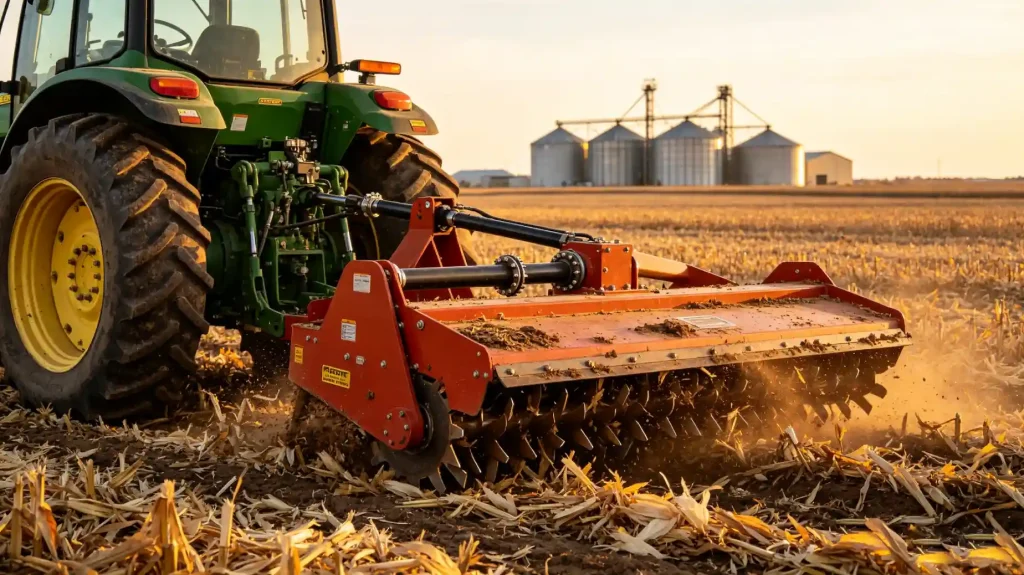
Flail shredders and flail mowers are the workhorses of pasture management, roadside clearing, cover crop termination, and post-harvest residue management. The flail rotor, whether using Y-blades, hammer blades, or T-blades, creates a continuous series of impact events as it contacts vegetation, small branches, and occasional field debris. Each impact sends a brief, intense torque spike back through the drivetrain.
540 RPM vs 1000 RPM for Flail Shredders
Flail shredder PTO speed depends on rotor diameter and blade tip speed requirements set by the manufacturer:
- 540 RPM: Common on smaller, lighter-duty flail mowers (60 to 84 inch working width) typically mounted on sub-100 HP tractors. The lower speed translates to lower blade tip speed at a given rotor diameter.
- 1000 RPM: Standard on heavy-duty commercial flail shredders (84 inch and wider, 100-plus HP requirement). Higher rotor speed achieves the blade tip velocity needed for clean, consistent shredding of heavier material.
Never connect a 1000 RPM flail shredder to a 540 RPM PTO output. Insufficient rotor speed results in poor cutting quality, rotor wrapping, and excessive belt or chain drive loading inside the machine.
Slip Clutch vs Friction Clutch for Flail Shredder Applications
The debate between slip clutch and shear bolt for flail shredder applications is settled by one practical consideration: frequency of overload events. In heavy residue management or pasture renovation work, a flail shredder may encounter overload conditions dozens of times in a single pass. Replacing shear bolts that frequently is operationally unworkable. The slip clutch wins outright for flail shredder applications.
- Ratchet (pawl) type slip clutch: Provides positive re-engagement after each slip event. Good for flail mowers in moderate to heavy grass, where short-duration spikes are common.
- Multi-disc friction slip clutch: Better for very heavy-duty applications (woody material, crop residue shredding) where sustained overload events are more likely. Requires periodic torque re-tensioning as friction surfaces bed in.
Common Flail Shredder Brands and PTO Shaft Specifications in North America
| Brand / Model | Working Width | PTO Speed | Shaft Series | Clutch Type |
|---|---|---|---|---|
| Orsi Magnum / Tagliaerba | 60 – 120 in | 540 / 1000 RPM | Series 4 / 6 | Slip Clutch |
| Seppi M. Midipierre / Maxisoil | 72 – 96 in | 1000 RPM | Series 6 / 8 | Multi-disc Slip |
| John Deere HX10 / HX15 batwing | 10 – 15 ft | 1000 RPM | Series 6 | Ratchet Slip |
| Schulte FX-1500 / FX-2100 | 15 – 21 ft | 1000 RPM | Series 8 | Multi-disc Slip |
Master Comparison: PTO Shaft Specifications by Implement Type
Use this reference table when sourcing a replacement shaft or when comparing specifications across your implement fleet. All data reflects common North American market configurations; always verify against your specific model manual.
| Implement Category | Typical RPM | Shaft Series | Load Type | Best Overload Protection | CV Joint Needed |
|---|---|---|---|---|---|
| Vertical Feed Mixer (TMR) | 1000 RPM | Series 6 / 8 | Sustained High Torque | Friction Disc Slip Clutch | Rarely |
| Horizontal Feed Mixer | 540 / 1000 RPM | Series 4 / 6 | Sustained Medium Torque | Slip Clutch or Shear Bolt | No |
| Discbine / Disc Mower | 1000 RPM | Series 6 | High Inertia Spike | Friction Disc Slip Clutch | Wide models: Yes |
| Flail Shredder (light-duty) | 540 RPM | Series 4 / 6 | Repetitive Impact Spikes | Ratchet Slip Clutch | No |
| Flail Shredder (heavy-duty) | 1000 RPM | Series 6 / 8 | Repetitive Impact Spikes | Multi-disc Slip Clutch | No |
How to Measure Your PTO Shaft and Prepare Your Order
Before contacting Metalite or any supplier, gather the following measurements and specifications. Having this information ready reduces the back-and-forth and allows for same-day order confirmation in most cases.
- Compressed length: Measure the shaft from U-joint center to U-joint center when fully compressed (shortest working position). Record in millimeters or inches.
- Extended length: Measure again at maximum working extension. The difference gives you the telescoping travel range required.
- Tractor-end connection: Spline count and shaft diameter. Most North American tractors use 1-3/8 inch 6-spline (for 540 RPM) or 1-3/4 inch 21-spline (for 1000 RPM). Confirm on your tractor PTO stub shaft.
- Implement-end connection: This varies significantly. Some feed mixers use a large-bore 21-spline input; discbines may use a keyed shaft or a quick-release yoke specific to the gearbox design.
- Overload protection specification: Note the OEM-specified disengagement torque (usually in Nm, listed in the implement manual). This is critical for slip clutch pre-tensioning.
- Make, model, and serial number of your implement: For discbines especially, model-year changes sometimes altered shaft specifications mid-production run.
If you are sourcing shafts for multiple units across a mixed equipment fleet, the Metalite team can prepare a consolidated compatibility sheet covering your entire lineup in a single communication. This is particularly useful for agricultural dealers and large livestock operations managing 10 or more PTO-driven implements.
For a broader overview of the complete Metalite PTO shaft lineup across all agricultural implement categories, visit the agricultural PTO drive shaft category page.
OEM vs Aftermarket PTO Shafts: An Honest Assessment for Canadian Buyers
The OEM-versus-aftermarket debate in agricultural drivetrain components comes down to two practical questions: does the aftermarket part meet the mechanical specification, and does the supplier stand behind the product? Here is an honest breakdown:
- OEM pricing premium: Dealer-supplied OEM PTO shafts for discbines and feed mixers routinely carry a 40 to 80 percent price premium over equivalent-spec aftermarket units. For a fleet operator replacing three or four shafts per season, this is a significant annual cost difference.
- Availability: OEM parts for older model machines can have extended lead times, especially through Canadian dealerships. Metalite maintains inventory of the most common North American market configurations for same-week shipping.
- Specification equivalence: A quality aftermarket shaft from a supplier operating to ISO 5673 standards will match OEM torque ratings, tube wall thickness, and U-joint cross kit dimensions. The key is knowing your supplier adheres to these standards.
- Warranty and support: Reputable aftermarket suppliers such as Metalite back their products with a product warranty and a technical support line. This is the non-negotiable differentiator between a quality supplier and a low-cost import of unknown specification.
For livestock and hay operations running Jaylor, Peecon, New Holland, or Case IH equipment in Canada, Metalite aftermarket PTO shafts offer a straightforward value proposition: OEM-equivalent performance, faster availability, and a lower per-unit cost that directly improves the economics of the operation.
Frequently Asked Questions: PTO Shafts for Feed Mixers, Discbines, and Flail Shredders
Source PTO Shafts for Your Feed Mixers, Discbines, and Flail Shredders from Metalite
Metalite is a Canadian agricultural PTO drive shaft supplier specializing in OEM-compatible aftermarket replacements for North American and European hay and livestock equipment. Whether you are an individual farm operator sourcing one emergency replacement or an equipment dealer placing a bulk seasonal order, our team is ready to match your specifications and deliver.
- ✓ Direct replacement fitment for Jaylor, Peecon, New Holland, Case IH, AGCO Hesston, Krone, and more
- ✓ Slip clutch, shear bolt, ratchet, and CV joint shaft configurations available
- ✓ Bulk pricing and OEM custom specification available for dealers and large operations
- ✓ Canadian market stocking with competitive lead times across all provinces
Send your implement make, model, and shaft measurements to: [email protected]
Our technical sales team typically responds within one business day. For urgent field-season requirements, please note your timeline in the subject line.
editor:WM