
Planetary Gearbox
Compact, high-torque planetary gear systems engineered for track drives, winch drives, wind turbines, slewing applications, and more — built to ISO/DIN standards with global brand interchangeability.
Why Engineers Choose EPG Canada for Gearbox Supply
A planetary gearbox is a gear reducer in which one or more planet gears revolve around a central sun gear, all contained within a ring gear (annulus). This concentric, coaxial architecture allows the load to be shared across multiple gear meshes simultaneously — delivering high torque density, compact radial dimensions, and low backlash that no parallel-shaft reducer can match at equivalent power.
At EPG Canada, we supply both standard and customised planetary gearboxes across 10 application-specific categories. Every unit ships with material certificates, test reports, and full dimensional drawings. Our Canadian sales office works directly with OEMs, distributors, and engineering firms across North America and beyond.
We also cross-reference and interchange with leading global brands — see the interchangeability matrix below — so retrofitting an existing installation is straightforward without re-engineering the machine.
Key Technical Advantages
- High torque-to-weight ratio via load sharing
- Coaxial input/output (in-line planetary)
- Ratios from 3:1 to 10,000:1 in multi-stage
- Backlash as low as ≤3 arc-min available
- Carburised & case-hardened helical gears
- IP65 / IP67 sealed housing options
Planetary Gearbox Types
Ten application-specific configurations — select the category that matches your drive architecture.
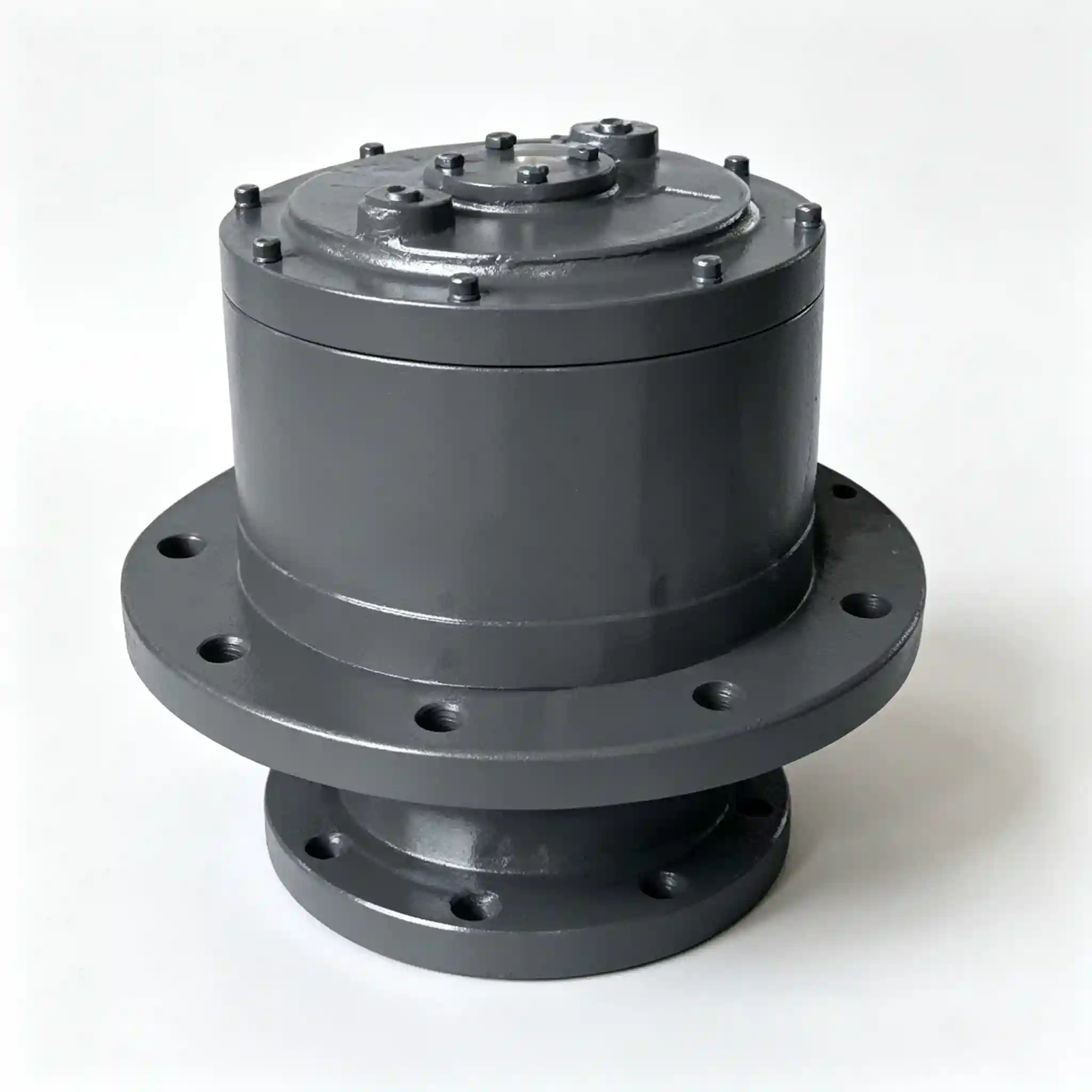
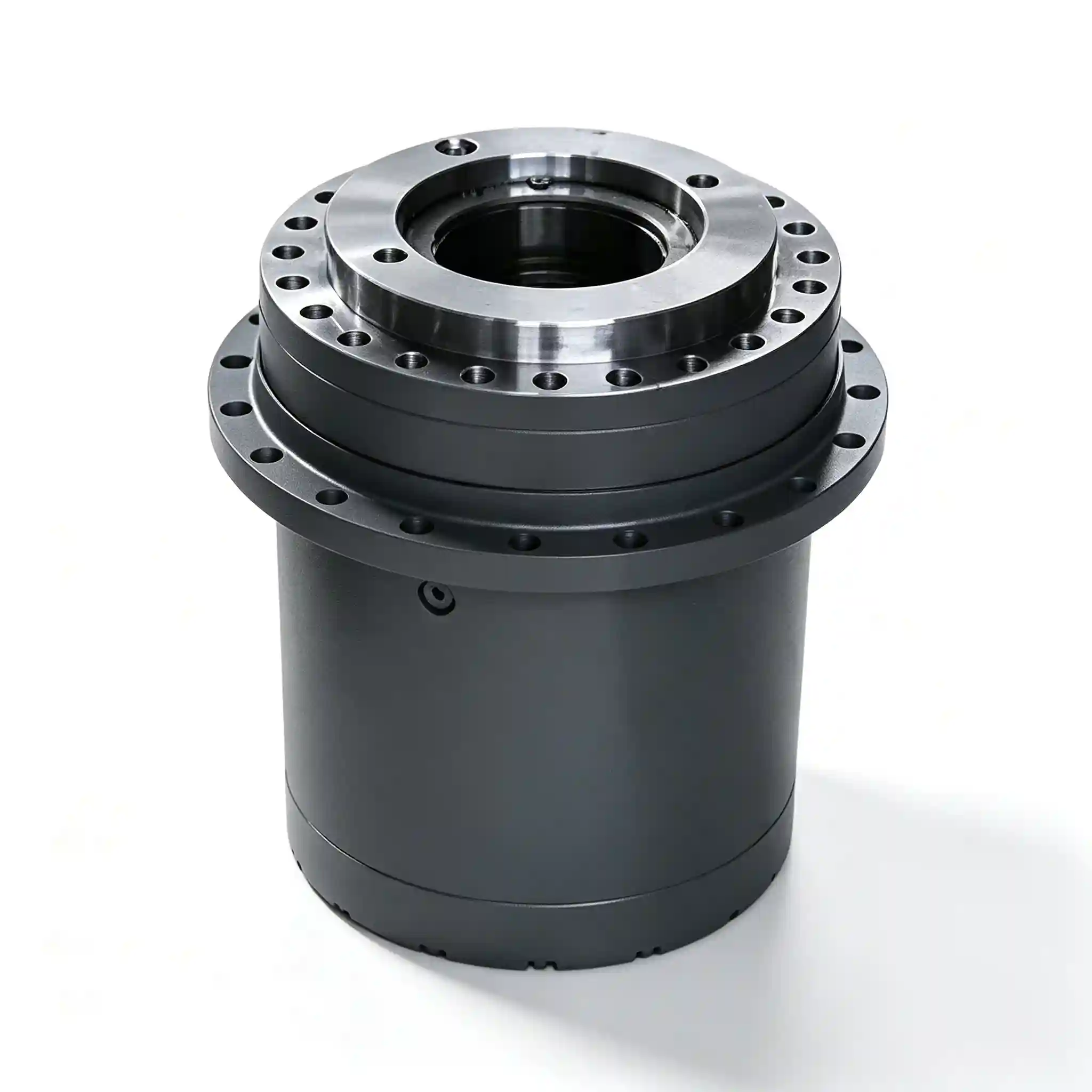
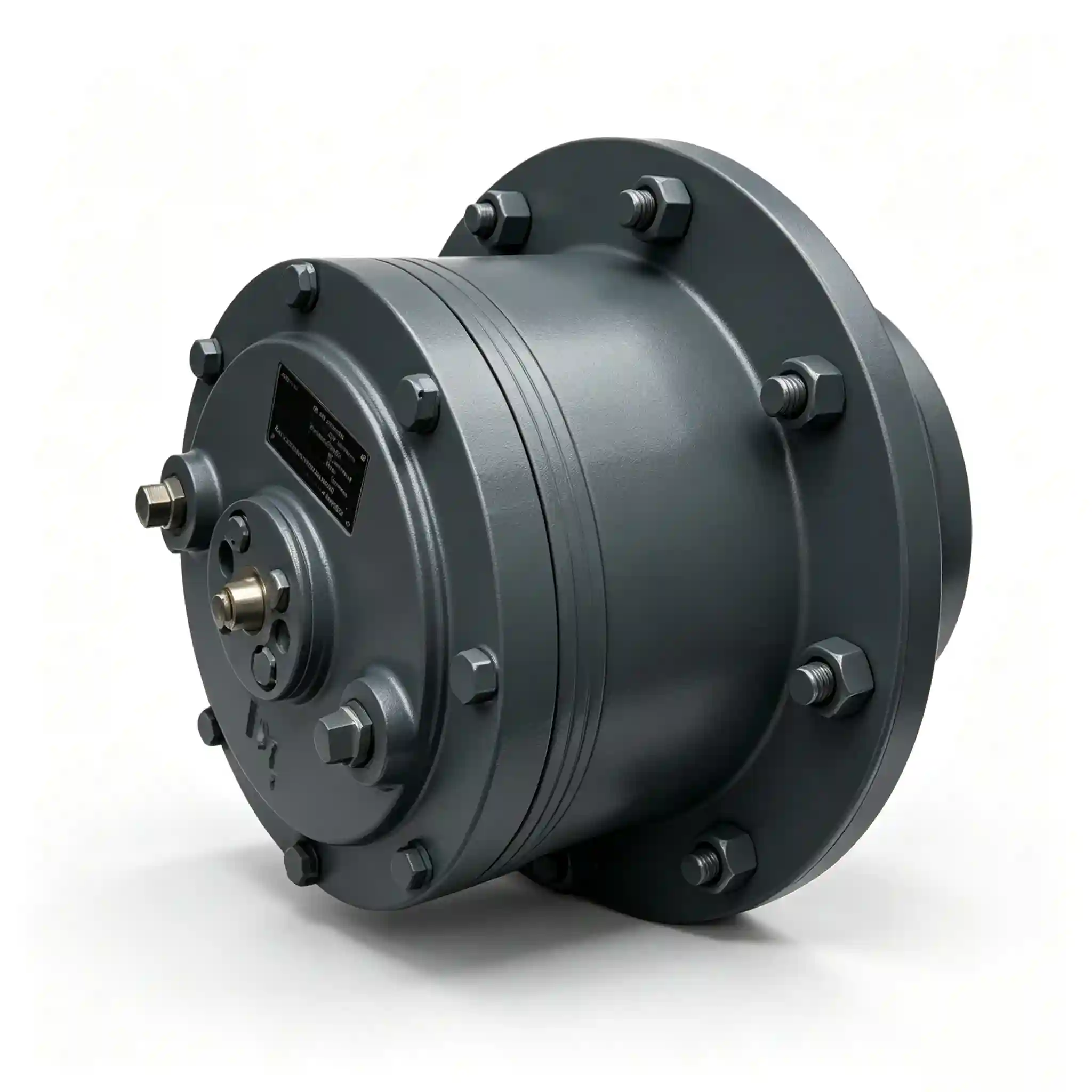
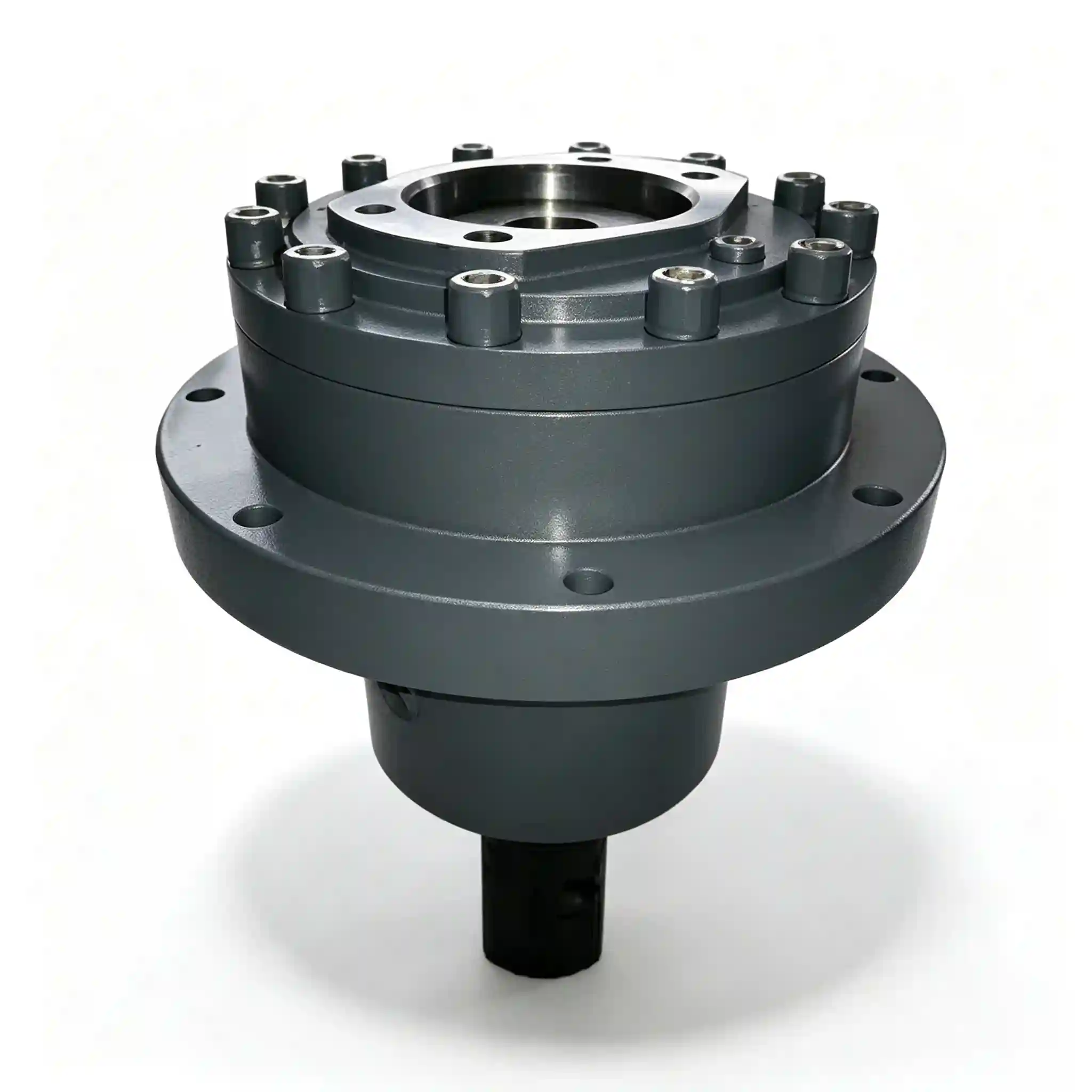
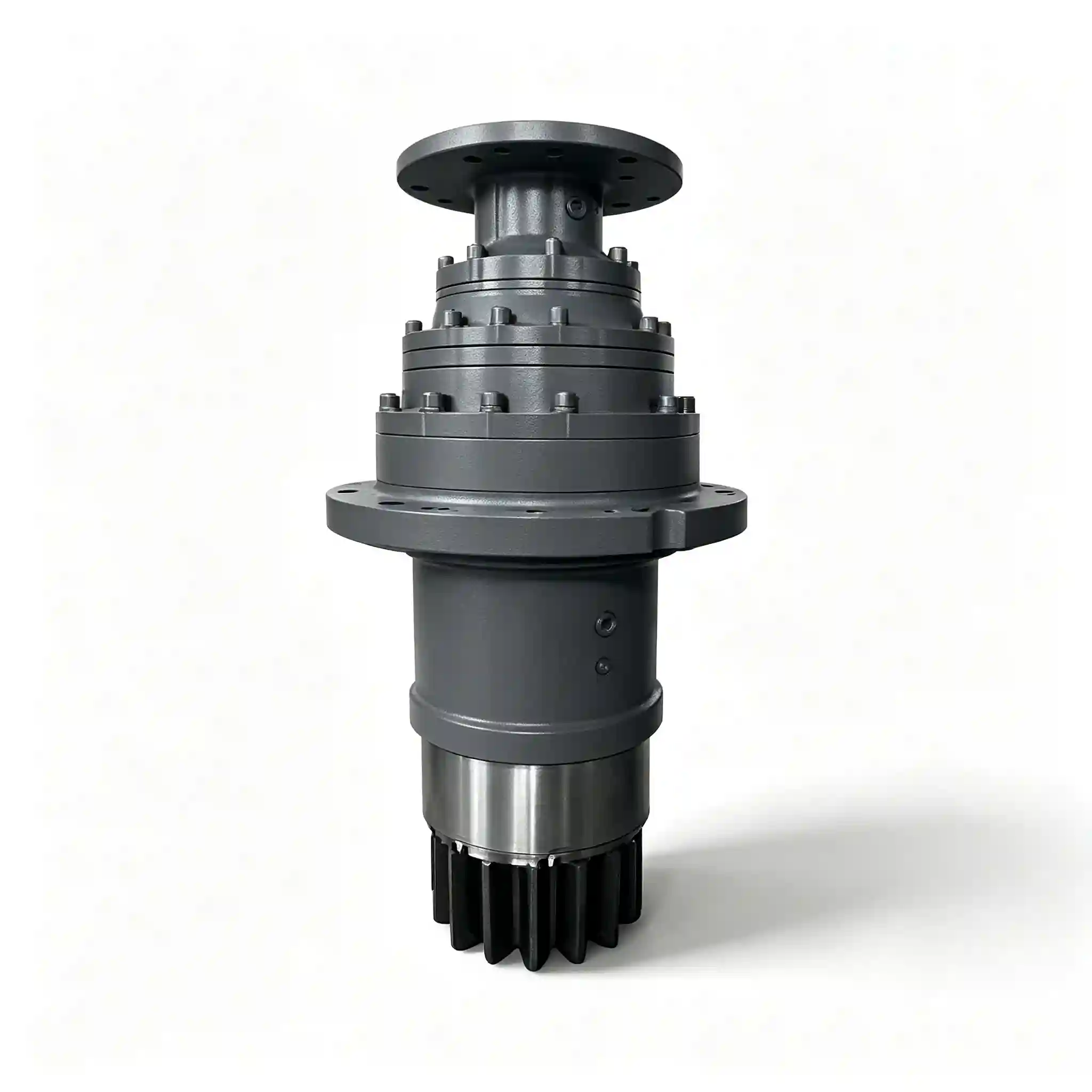
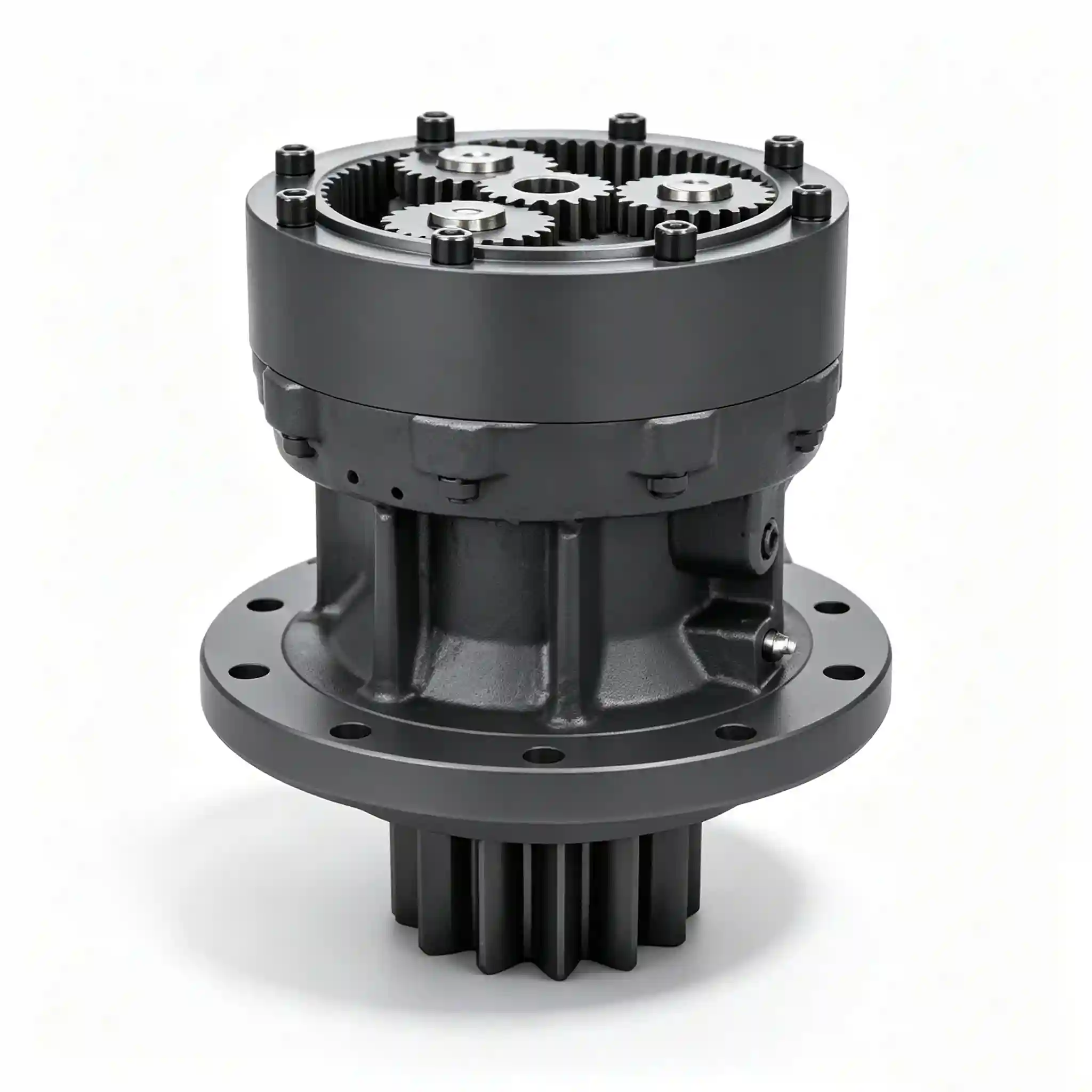
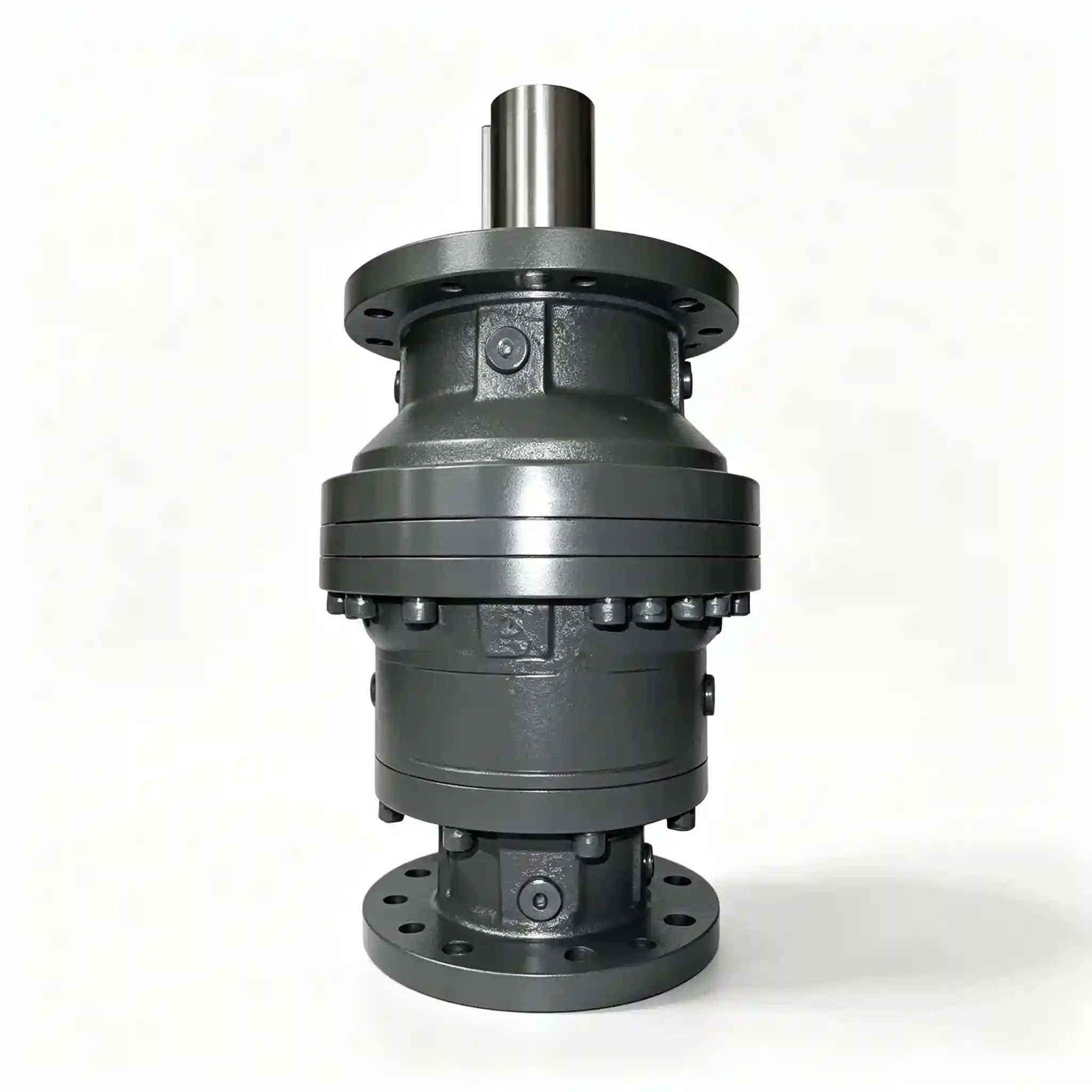
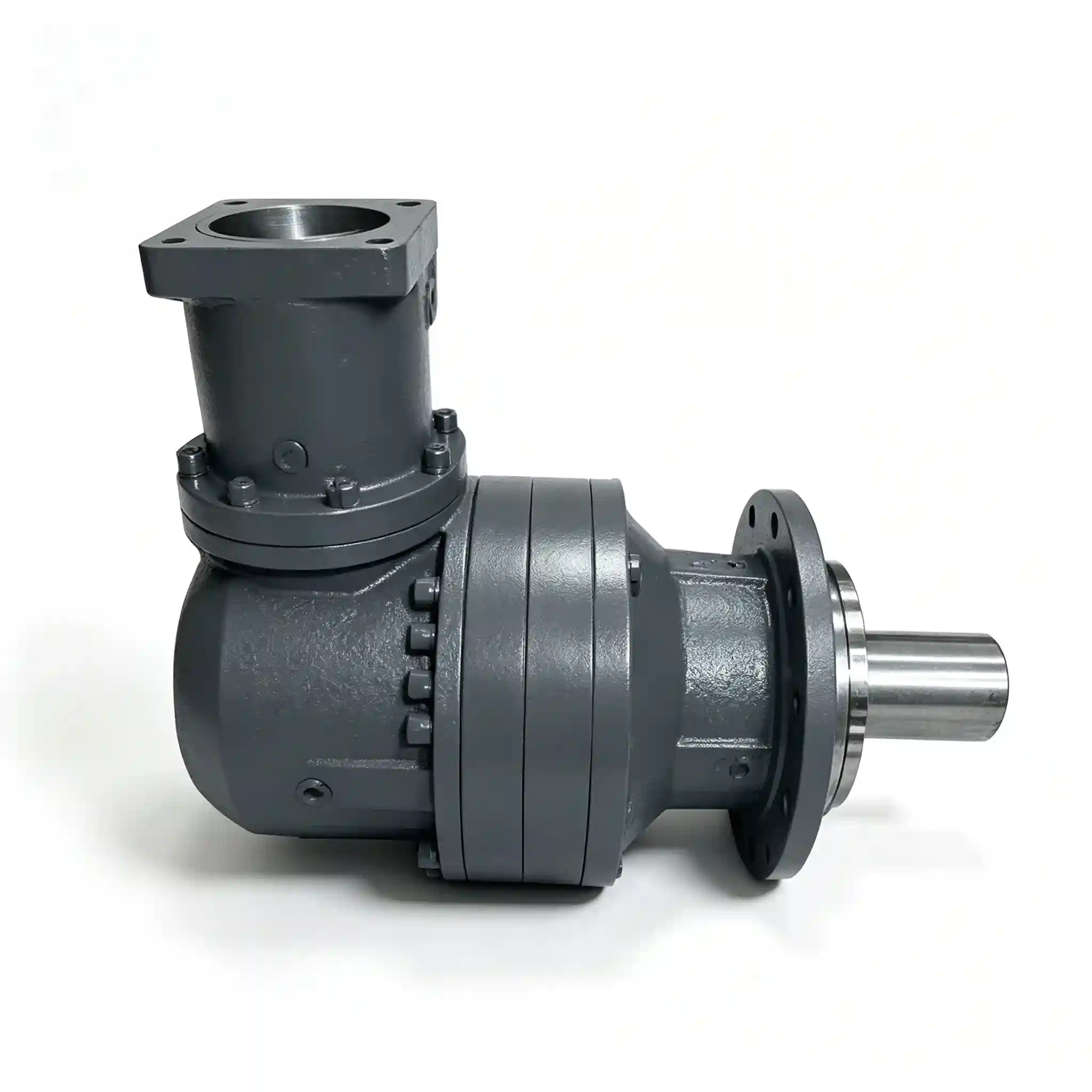
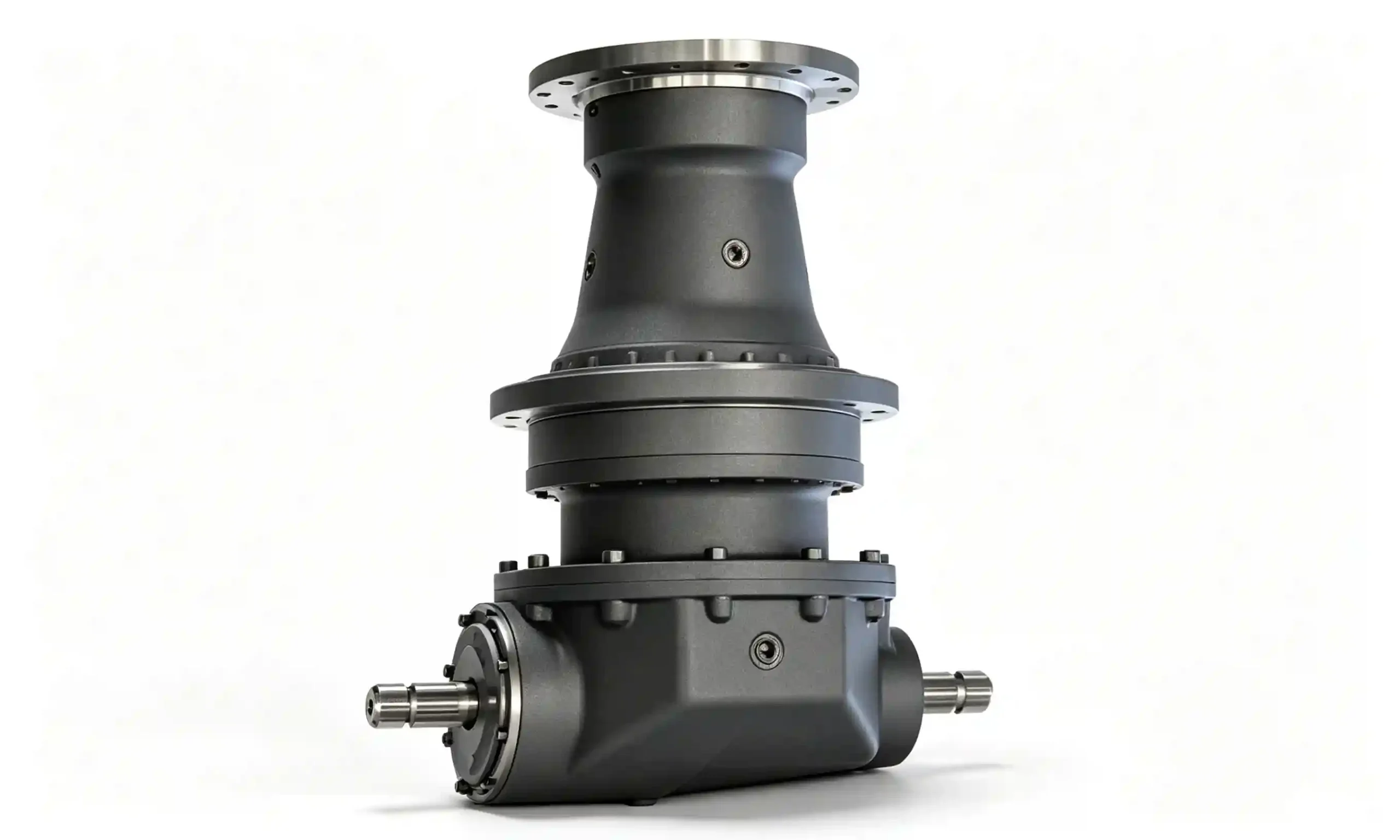
Feed Mixer Gearbox
Agricultural-duty planetary reducers engineered for TMR feed mixers — sealed against dust and moisture, with robust overload tolerance for agriculture use.
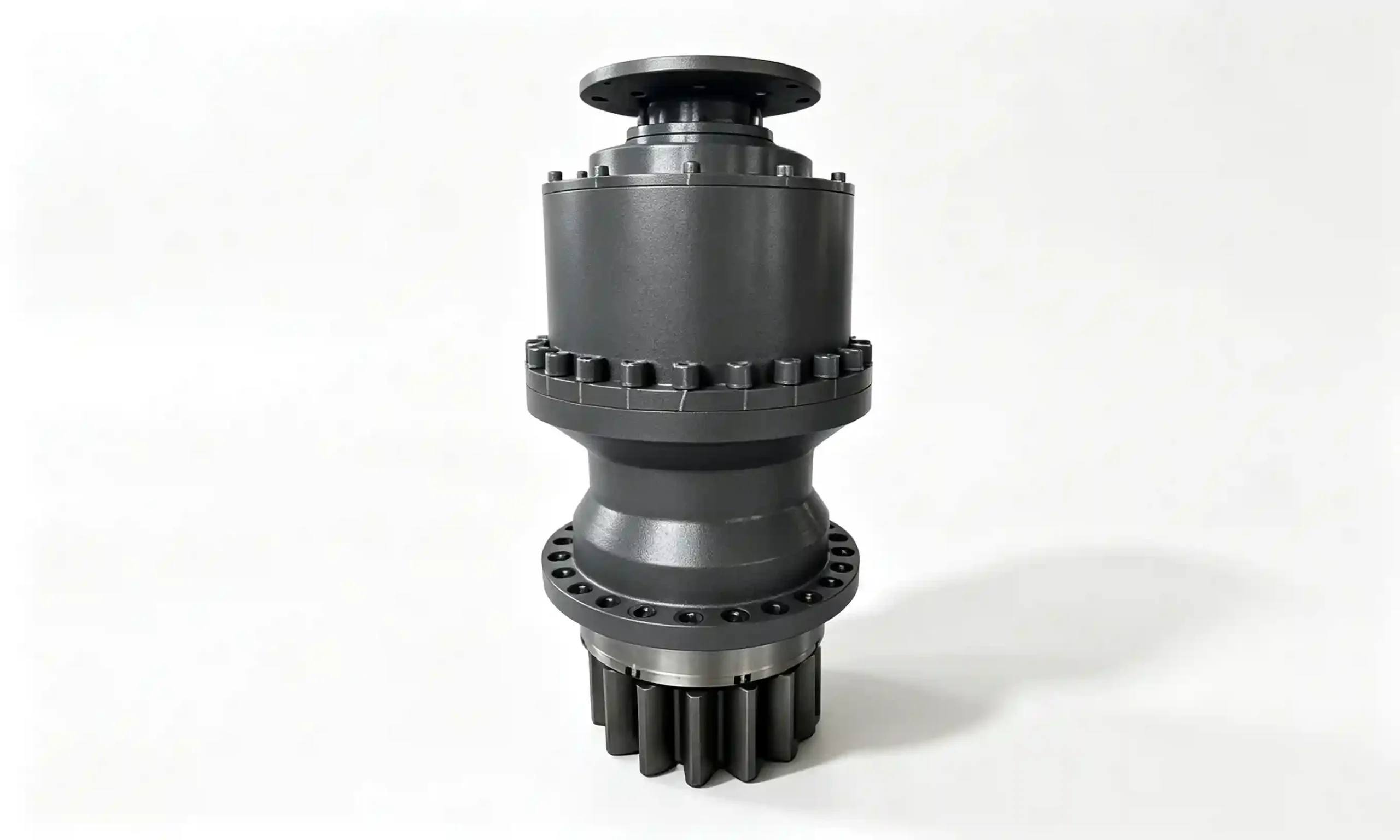
Wind Turbine Gearbox
Certified pitch and yaw drive gearboxes for wind turbines — designed for 20+ year service life under variable loading and extreme conditions.
Brand Interchange & Cross-Reference
Our planetary gearboxes are dimensionally and functionally interchangeable with the following OEM brands. Simply provide the original model number and we will cross-reference and supply a direct drop-in replacement.
How a High-Quality Planetary Gearbox Is Born
Ten precision-controlled stages — from raw billet to performance-tested unit — ensure every gearbox leaves our facility ready for decades of service.
Raw Material
High-grade alloy steel, cast iron, and stainless selected and pre-treated; blanks cut close to finished shape.
Forging / Casting
Sun gears and planet carriers hot-forged for density; complex housings cast and normalised.
Rough Machining
CNC turning, milling, and drilling remove bulk excess and establish datum surfaces, bores, and keyways.
1st Heat Treatment
Normalising, annealing, or tempering optimises grain structure, hardness, and machinability for subsequent operations.
Precision Machining
Gear hobbing, shaving, and grinding to DIN/AGMA accuracy grades; planetary carrier precision-levelled.
2nd Heat Treatment
Carburising quench and nitride surface hardening to HRC 58–62 for long-term wear and fatigue resistance.
Fine Grinding
Post-hardening cylindrical and gear grinding restores dimensional accuracy lost to heat-treat distortion; achieves Ra ≤0.4μm.
Inspection
CMM dimensional check, Vickers hardness test, magnetic particle and ultrasonic NDT — zero-defect shipment policy.
Assembly
Cleanroom assembly: grease pre-packed, seals seated, gear mesh and backlash verified per engineering drawings.
Performance Test
No-load run, noise and vibration measurement, full-load performance test under rated torque before final shipment.
Planetary Gearbox FAQ
Answers to the most common questions from engineers and procurement teams. Can’t find what you need? Contact us directly.
Speak with an Engineer
+1-604 719 2870
RFQ response within 24 hours
What is the difference between a planetary gearbox and a helical gearbox?
A planetary (epicyclic) gearbox transmits torque through multiple planet gears that orbit a sun gear inside a ring gear, achieving very high torque density and a coaxial input/output shaft arrangement. A helical gearbox uses offset parallel shafts with angled teeth for smooth, quiet operation but at lower torque-to-size ratios. Planetary units are preferred when compactness, high reduction ratios, and shock-load resistance are the priority.
What is the difference between a worm gearbox and a helical gearbox?
Worm gearboxes use a worm screw driving a bronze wheel, producing a 90-degree shaft angle, self-locking capability and very smooth, quiet operation at high reduction ratios in a compact housing. Efficiency is typically 70–88%. Helical gearboxes use angled parallel helical teeth for quiet, high-efficiency (up to 98%) operation at both low and high speeds. They are the preferred choice where energy efficiency and continuous-duty performance are priorities, while worm reducers excel in low-speed, high-reduction positioning and material handling applications.
What gear ratios are achievable with a planetary gearbox?
A single-stage planetary gearbox typically achieves ratios of 3:1 to 10:1. Multi-stage configurations (two or three stages in series) extend this range to several hundred or even thousands to one, depending on the application. For example, track drive final drives commonly use ratios between 50:1 and 200:1, while wind turbine pitch drives may require 1,000:1 or higher.
How do I select the right planetary gearbox for my application?
A single-stage planetary gearbox typically achieves ratios of 3:1 to 10:1. Multi-stage configurations (two or three stages in series) extend this range to several hundred or even thousands to one, depending on the application. For example, track drive final drives commonly use ratios between 50:1 and 200:1, while wind turbine pitch drives may require 1,000:1 or higher.
Can you supply a planetary gearbox to replace a Bosch Rexroth or Brevini unit?
Yes. Our products are dimensionally interchangeable with Bosch Rexroth GFT/GHT, Brevini FD/FDC, Bonfiglioli, Zollern, Parker, and many other common OEM brands. Provide the original model number or drawings and we will cross-reference and supply a direct replacement — in most cases without any machine modification.
What documentation comes with each planetary gearbox?
Standard documentation includes: material test certificates, dimensional inspection report, hardness test records, factory test run report, assembly drawing, and a packing list. CE Declaration of Incorporation and third-party inspection certificates (SGS, BV, TÜV) are available on request.