Hydraulic Cylinders for Every Machine, Every Market
EPG manufactures single-acting, double-acting, telescopic, and welded hydraulic cylinders for 15 equipment categories. Bore sizes from 25 to 500 mm. Working pressures from 7 to 35 MPa. Built to ISO 6020/6022 and NFPA standards — shipped to 50+ countries.
Product Categories
We build hydraulic cylinders across 15 equipment families. Each line is engineered with application-specific materials, seal packages, coatings, and mounting options. Click any category below for product details and specifications.

Construction Machinery Hydraulic Cylinders
Boom, arm, bucket, and outrigger cylinders for excavators, wheel loaders, dozers, and mobile cranes. Welded construction rated to 35 MPa. This category alone accounts for over one-third of global hydraulic cylinder demand.
View Products →
Dump Truck & Trailer Hydraulic Cylinder
Single-acting and telescopic hoist cylinders for dump bodies, tipping trailers, and hook-lift frames. Rated for high tonnage with chrome or ceramic rod coatings. Supplied with mounting pins and seal kits.
View Products →
Telescopic Hydraulic Cylinders
Multi-stage telescopic cylinders with 2 to 6 stages. Maximum stroke from minimum retracted length for dump trucks, tippers, refuse bodies, and hook-lift systems. Chrome and ceramic rod coatings for long life.
View Products →
Sanitation Machinery Hydraulic Cylinders
Compaction, hopper-lift, and sweeper-arm cylinders for refuse trucks and street-cleaning vehicles. High-cycle urban duty, corrosion protection, and compact mounting to fit tight vehicle chassis envelopes.
View Products →
Tunnel Boring Machine (TBM) Hydraulic Cylinders
Thrust, gripper, and segment erector cylinders for shield and EPB tunnel boring machines. Extra-long strokes, high pressure, reinforced rod seals, and position feedback sensors for continuous underground operation.
View Products →
Agricultural Machinery Hydraulic Cylinders
Cylinders for tractors, combine harvesters, plows, sprayers, and seed drills. Solid forged rods, zinc-nickel or ceramic coatings, and contamination-resistant seals built for dust, mud, and temperature swings in open-field conditions.
View Products →
Tractor & Front End Loader Hydraulic Cylinder
Bucket lift, arm tilt, and attachment cylinders for front-end loaders and tractor-mounted implements. Hardened rods to resist abrasion from soil and aggregate, plus heavy-duty wiper seals to keep grit out.
View Products →
Forklift Hydraulic Cylinders
Lift, tilt, and side-shift cylinders for electric, LPG, and diesel forklifts. Designed for high cycle counts in warehouse and dock operations. Compact envelopes and hardened rod surfaces to resist carriage wear.
View Products →
Steering Hydraulic Cylinder
Power steering cylinders for articulated loaders, agricultural tractors, and heavy-haul vehicles. Double-acting design with tight seal clearances for responsive, drift-free directional control at any speed.
View Products →
Aerial Work Vehicle Hydraulic Cylinders
Boom, scissor-lift, and platform-leveling cylinders for aerial work platforms (AWPs) and cherry pickers. Precision bores and internal cushioning for smooth, jerk-free motion at working height. ANSI A92 and EN 280 compatible.
View Products →
Industrial Engineering Hydraulic Cylinders
Cylinders for hydraulic presses, injection molding machines, metalworking lines, and factory automation. Servo-grade seal packages and tight bore tolerances (H8) for repeatable positioning in production machinery.
View Products →
Mobile Machinery Hydraulic Cylinders
A broad range covering forestry machines, road-building equipment, material handlers, and specialty mobile rigs. Customizable bore, stroke, and mount combinations for vehicles where no standard catalog cylinder fits.
View Products →
American Standard Series Hydraulic Cylinders
NFPA-interchangeable tie-rod and welded cylinders in inch-dimension bore sizes (1.5″–14″). Direct fit-for-fit replacements for Parker, Eaton, and other North American OEM specs. Bore, port, and mount dimensions match NFPA T3.6.7.
View Products →
Offshore Hydraulic Cylinders
Marine-grade units for jack-up platforms, subsea valve actuators, deck cranes, and hatch cover systems. Duplex stainless steel and Inconel rod options. Documentation packages supporting DNV, ABS, and Bureau Veritas class approval.
View Products →
Energy Technology Hydraulic Cylinders
Wind turbine pitch actuators, solar tracker drives, hydroelectric dam gate cylinders, and power plant maintenance tools. Engineered for extreme weather, vibration, and long intervals between service stops.
View Products →What Is a Hydraulic Cylinder — and What Does It Do?
A hydraulic cylinder is a mechanical actuator. It takes pressurized fluid — usually oil — and turns it into straight-line pushing or pulling force. That force lifts a dump bed, tilts an excavator bucket, steers a ship, or presses a 200-tonne metal blank into shape.
The physics are simple: Pascal’s law says pressure in a confined fluid pushes equally in all directions. Pump oil into one end of a cylinder, and it pushes the piston. The piston rod extends, and whatever is bolted to it moves. Reverse the oil flow, and the rod retracts. The governing equation is F = P × A — force equals pressure times piston area. A 100 mm bore cylinder at 20 MPa generates about 157 kN (roughly 35,000 lbf) of push force. That is a lot of muscle from a component smaller than a fire extinguisher.
Compared with electric linear actuators, hydraulic cylinders deliver 5 to 10 times more force per unit volume. They also tolerate shock loads, extreme temperatures, and dirty environments far better than electric alternatives, which is why they remain the standard in construction, agriculture, mining, marine, and heavy industry.
The global hydraulic cylinder market was valued at approximately USD 17 billion in 2025. Construction accounts for about 36% of demand; mobile equipment covers another 55%. Growth is running at roughly 5% annually, driven by infrastructure spending and farm mechanization worldwide.
F = P × A
Hydraulic Cylinders Industry Applications
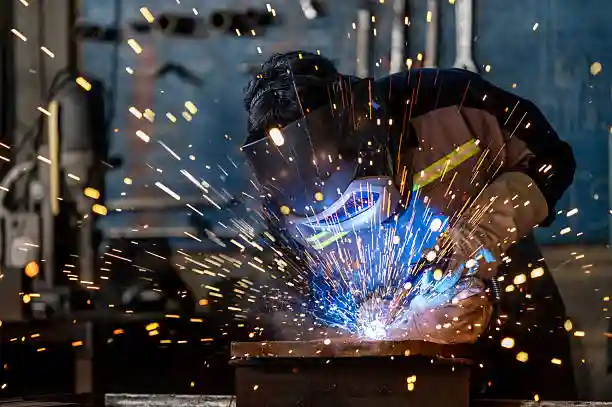
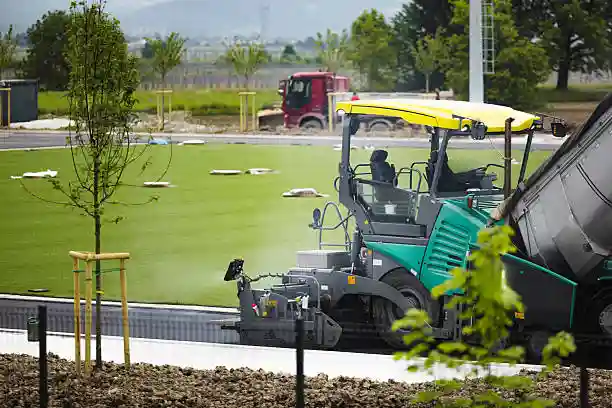
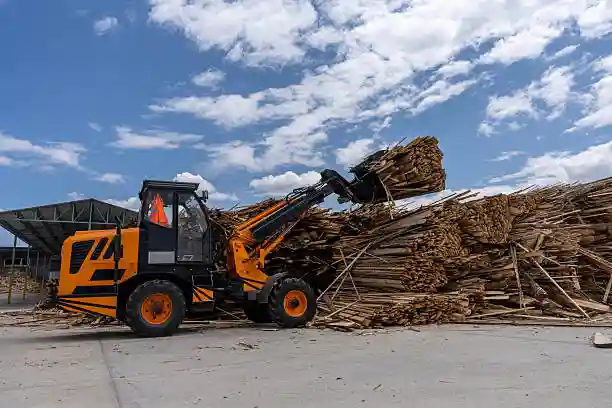
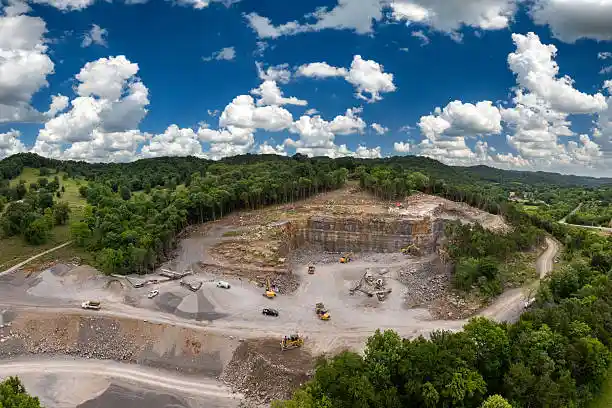
Hydraulic cylinders go wherever heavy loads need to move with control. Here is where the bulk of global demand sits:


How Hydraulic Cylinders Work
Every hydraulic cylinder follows the same cycle, regardless of size or application. Here is the sequence from rest to full extension in a standard double-acting design:
Oil enters the cap end. The directional control valve routes pressurized fluid from the hydraulic pump into the cap-side port. Pressure builds against the full piston face.
The piston moves forward. When oil pressure overcomes the load resistance plus seal friction, the piston accelerates. Oil on the rod side is pushed out through the head-side port and returns to the reservoir.
The rod extends. Because the rod is rigid and connected to the piston, it moves outward at the same speed. The attached implement — a boom, bucket, or press platen — follows.
Speed is set by flow rate. Velocity = Flow / Piston Area. A 100 mm bore cylinder fed with 30 L/min extends at about 0.64 m/s. Controlling the pump flow or the valve opening gives precise speed regulation.
Retraction reverses the flow. The valve switches. Oil now enters the head-side port, pushing the piston back. Because the rod takes up part of the piston area on this side (annular area), the retract force is lower but the retract speed is faster at the same flow rate.
Cushioning absorbs shock at end-of-stroke. Many cylinders include internal cushion plungers near the endcaps. These meter the escaping oil through a restricted orifice in the final 10–20 mm of travel, decelerating the piston smoothly and protecting the cylinder from impact damage.
In a single-acting cylinder, oil enters on one side only; the return stroke relies on gravity, a spring, or the weight of the load. Telescopic cylinders use multiple nested stages that extend sequentially — each stage pushes the next — to achieve long strokes from short retracted lengths.
Hydraulic Cylinders FAQ
What is the difference between single-acting and double-acting hydraulic cylinders?
A single-acting cylinder pushes in one direction using oil pressure; the return stroke depends on gravity, a spring, or the weight of the load. A double-acting cylinder uses oil pressure on both sides of the piston, giving powered and controlled motion in both extending and retracting directions. About 71% of all hydraulic cylinders installed globally are double-acting.
How do I figure out the right bore size?
Start with the total force you need (load + friction + back-pressure + safety factor of at least 1.25×). Divide that force by your available system pressure to get the minimum piston area: A = F / P. Convert area to diameter: d = √(4A/π). Then round up to the nearest ISO 3320 or NFPA standard bore. If you share your load data with us, our engineering team will do the sizing for you.
Which international standards do your cylinders follow?
Dimensional standards: ISO 6020-2 (16 MPa medium duty), ISO 6022 (25 MPa heavy duty), and NFPA T3.6.7 (North American inch-dimension interchange). Mounting accessories per ISO 8132. Bore/rod sizing per ISO 3320 and ISO 4395. Barrel tube sourced to EN 10305-1. Testing per ISO 10100. CE marking and classification society documentation (DNV, ABS, BV) available for offshore and European-market applications.
Can you build cylinders to our OEM drawings?
Yes. We handle full OEM and ODM projects. Send us your bore, stroke, pressure, mounting style, rod diameter, port configuration, fluid type, operating temperature, and target standard. We return a detailed proposal with 3D models, FMEA documentation, and pricing for prototype through volume production — typically within 24–48 hours of receiving complete specifications.
What seal materials work for high temperatures or corrosive fluids?
NBR (nitrile) covers –30 °C to +100 °C in standard mineral oil. FKM (Viton) handles up to +200 °C. PTFE with bronze or carbon fillers resists most chemicals and works with water-glycol or phosphate-ester fluids. Polyurethane (PU) gives high wear resistance for heavy-pressure cycling. We source from Trelleborg and Hallite and can match seal compounds to your duty cycle.
What is your lead time?
Standard-spec cylinders with common bore/stroke combinations ship in 2–4 weeks. Custom-engineered units — non-standard bores, special materials, classification society paperwork — take 4–8 weeks depending on complexity. Rush orders can be accelerated; contact our sales team with your timeline.
How do I keep my cylinders running as long as possible?
Five things matter most: (1) Keep hydraulic fluid clean — target ISO 4406 code 18/16/13 or better with proper filtration. (2) Inspect the piston rod surface regularly for scoring, chrome flaking, or corrosion. (3) Replace seals at the first sign of external drip, not after a puddle forms. (4) Do not exceed the rated working pressure. (5) Protect exposed rod surfaces from physical impacts and environmental debris when the machine is parked. We supply seal kits with all replacement seals, wipers, and O-rings for field overhaul.