
Agriculture Sprockets
Hardened steel drive sprockets engineered for the demands of modern farm machinery — combine harvesters, seeders, planters, grain elevators, and more. ANSI and ISO certified, stocked in North America.
The Drive Components That Keep Farm Equipment Running
Agriculture sprockets are precision-machined toothed wheels that engage with roller chains, pintle chains, and detachable chains to transfer power across the drive systems of farm machinery. From the gathering chains of a corn header to the conveyors inside a combine, sprockets are the mechanical link between engine output and field productivity.
Modern agricultural machines generate high torque, operate through sudden load reversals, and contend with abrasive dust, crop residue, moisture, and chemical exposure. Sprockets designed for these conditions use heat-treated carbon steel tooth profiles, hardened surfaces, and corrosion-resistant finishes — all manufactured to ANSI and ISO dimensional standards so they drop straight into OEM chain drive systems.
EPG Canada supplies a full range of agriculture sprockets to equipment dealers, farm cooperatives, machinery manufacturers, and maintenance operations across Canada and the United States. Our North American sales team provides technical selection support, quick-turnaround quotes, and direct shipping from regional warehouses.
Agriculture Sprocket
Eight sprocket configurations covering every agricultural chain drive application, from field equipment to grain handling systems.
-
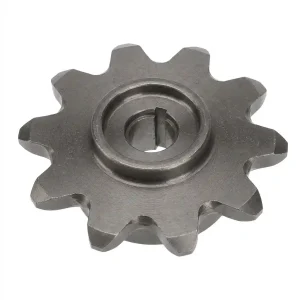
199497C1 Driven Sprocket for Case-IH Corn Head — 10-Tooth Replacement
-
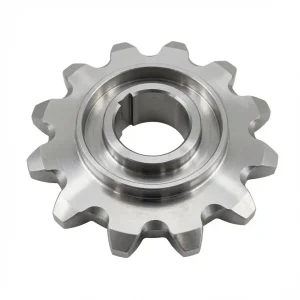
84072022 Driven Sprocket for New Holland & Case IH Combine Feeder Chain — 12T / 50mm Bore
-
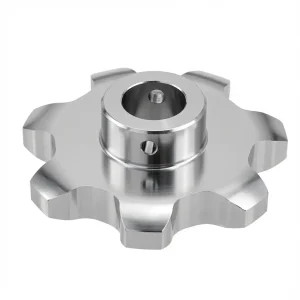
1317192C1 Sprocket — 9-Tooth Replacement for Case-IH Combine Grain Auger Drive
-
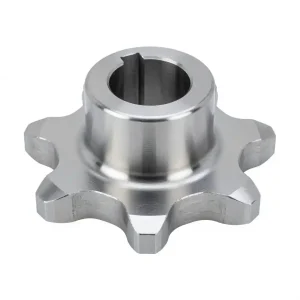
144031A1 Sprocket — 7-Tooth CA550 Replacement for Case IH Combine Elevator
-
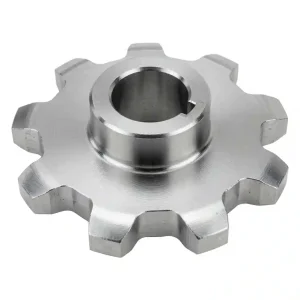
143960A1 Agricultural Sprocket — 9T Induction Hardened for Case IH 2188/2388
How Our Agriculture Sprockets Are Made
Raw Material Inspection
Incoming bar stock and plate material is certified to SAE 1045 or SAE 1055 carbon steel specification. Mill certificates verified before production release. Stainless orders use 304 or 316 grade verified by spectrometer analysis.
Tooth Profile Cutting
Sprocket teeth are hobbed or flame-cut using CNC-controlled equipment. ANSI standard tooth profiles are verified to maintain correct roller seating geometry — the factor most directly linked to chain wear life.
Heat Treatment
Sprockets with 30 teeth or fewer receive induction hardening on the tooth working surface to Rc 50–60. The core remains ductile to absorb shock loads. Large-diameter sprockets are selectively case-hardened on flanks only.
Bore & Hub Machining
Bores are finish-machined to customer specification — plain bore, finish bore, keyed, or hex. Bore tolerance holds H7 fit for precision shaft engagement. Hub faces are faced square to within 0.002" TIR.
Surface Treatment & Marking
Black oxide coating applied as standard — provides corrosion protection without dimensional change. Zinc plating or powder coat available on order. Part number and chain series stamped on every sprocket for field identification.
Final Inspection & Packaging
Pitch diameter, bore size, tooth profile, and hub square are checked against ANSI/ISO drawing before shipping. Each sprocket is individually bagged with anti-corrosion paper. Bulk orders packed in plywood cases for damage-free container shipping.
Quality Inspection Process — 4-Minute Walkthrough
See how every agriculture sprocket batch is inspected before shipping — from incoming material check to final dimensional verification and marking.
Request Factory VideoSprockets in Action Across the Farm
Agriculture sprockets perform specific roles in each type of equipment. Understanding the operating conditions in each application helps select the right tooth profile, hub style, and material.
What Equipment Buyers Say
”We switched our combine header drive sprockets to EPG Canada supply two seasons ago. The hardened teeth have held up far better than what we were getting from local dealer stock — we have not had a broken sprocket in the field since. That is a significant change for our operation.”
“As a machinery dealership we need sprockets in stock through July and August. EPG Canada has never let us down on lead time and their ANSI dimensional consistency means we can fit their parts across multiple OEM brands without modification. The pricing makes us competitive on service parts.”
“We needed custom OEM sprockets for a discontinued European potato harvester model. EPG Canada worked from our worn sample and had matched parts in three weeks. The tooth profile was exact and the split-style design they suggested cut our maintenance window from four hours to forty-five minutes.”
Agriculture Sprocket Questions
Agriculture Sprocket Questions
Our agriculture sprockets are manufactured to ANSI B29.1 and ISO 606 standards. They are compatible with CA550, CA550HD, CA555, CA620, CA650, A550, A555, A557, and A620 agricultural roller chains, as well as steel pintle chains, steel detachable chains, T-bar chains, and T-rod chains. We also supply standard ANSI #35 through #120 roller chain sprockets for seeder, planter, and irrigation drive systems.
What is the difference between welded and tie-rod hydraulic cylinders?
Standard carbon steel (SAE 1045/1055) with black oxide coating covers the majority of agricultural applications. Choose carbon steel for combine, seeder, and grain elevator drives where loads are high and chemical exposure is limited.
Stainless steel (304 or 316 grade) is the right choice for liquid fertilizer injection systems, manure handling equipment that contacts ammonia or acid-based products, irrigation drive components in high-chloride environments, and food-grade crop processing where contamination risk exists.
Cast iron sprockets suit high-load, moderate-speed applications such as grain elevator bottom drives and commercial auger systems where a large tooth count is required at lower cost.
What PSI rating do I need for my farm machinery?
- A-Plate (no hub): Flat plate design with no projecting hub. Used in weld-on applications where the sprocket is permanently attached to a shaft collar or framework. Common on conveyor drives and grain elevator legs.
- B-Hub (one hub): Hub projects on one side of the plate only. Used where shaft clearance is limited on one end of the sprocket. Standard choice for row crop header drives and seeder ground drives. Typically includes two set screws and a keyway.
- C-Hub (two hubs): Hubs project equally on both sides. Maximum shaft bearing surface — the correct choice for high-torque applications such as combine feeder houses, forage harvester drives, and any bidirectional drive system.
How do I maintain agricultural hydraulic cylinders?
Yes. EPG Canada can produce custom agriculture sprockets based on 2D drawings, CAD files (DXF, DWG, STEP), or worn samples sent to our technical team. We capture key dimensions — pitch diameter, bore size, tooth profile, hub configuration, and keyway — and produce a matching part using the same CNC hobbing and heat treatment as our standard range. Lead time for custom sprockets is typically 2–4 weeks depending on complexity and quantity. Send your drawing or sample to [email protected] for a no-obligation quote.
What is the minimum order quantity (MOQ) for B2B orders?
Split sprockets — two-piece bolted construction — are the right choice when the drive shaft cannot be easily disassembled for sprocket removal. This is very common in agricultural equipment where bearings, gearboxes, or frame members block shaft end access. A split sprocket bolts around the shaft without shaft removal, reducing a sprocket swap from several hours to under 30 minutes in the field. They are especially valuable on combine gathering chains, forage harvester pickup drives, and manure spreader floor chain drives where maintenance time during season directly affects operating revenue.
Do you ship to the United States?
Black oxide: the standard treatment. Good corrosion protection for typical field dust and seasonal moisture. Does not add dimensional thickness — preferred where close chain engagement tolerances are needed.
Zinc plating: 5–8 micron electroplated zinc for enhanced corrosion protection. Suitable for potato and root crop equipment operating in wet clay soils. Adds minimal dimensional thickness and maintains ANSI tolerance.
Powder coat: the most durable surface protection for manure and liquid fertilizer contact environments. Adds approximately 50–80 microns. Specify for floor chain sprockets on manure spreaders or liquid injection system components.
For severe chemical exposure (ammonia, nitric acid, sulfuric acid), specify 316 stainless steel instead of coated carbon steel — the coating will not withstand continuous chemical contact.