Описание
What Is the Hook Lift Body Lock Cylinder — and Why Does It Matter?
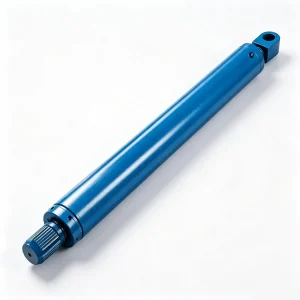
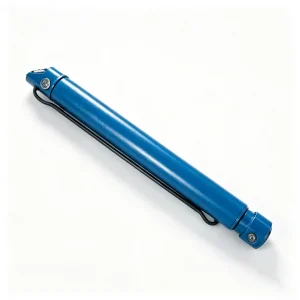
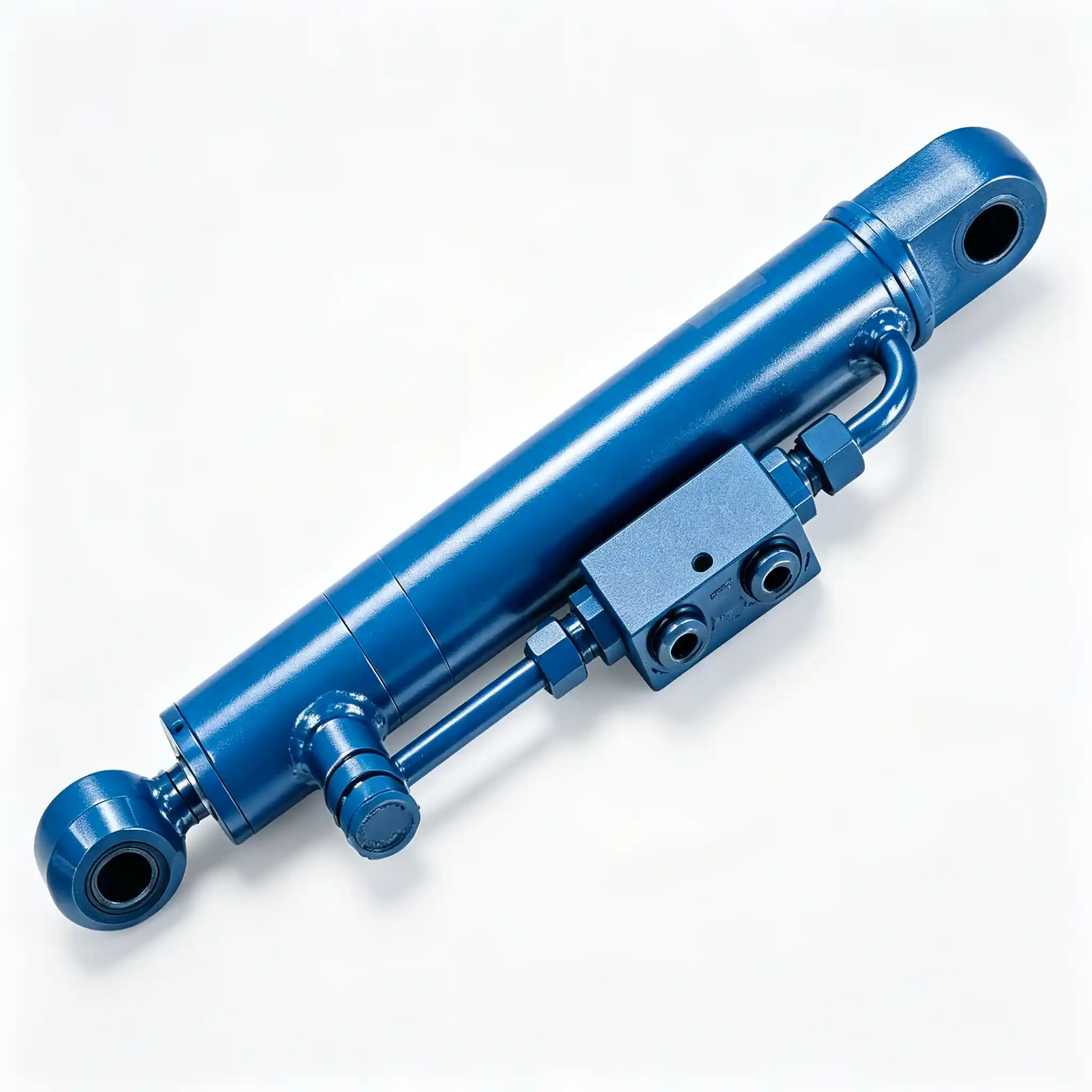
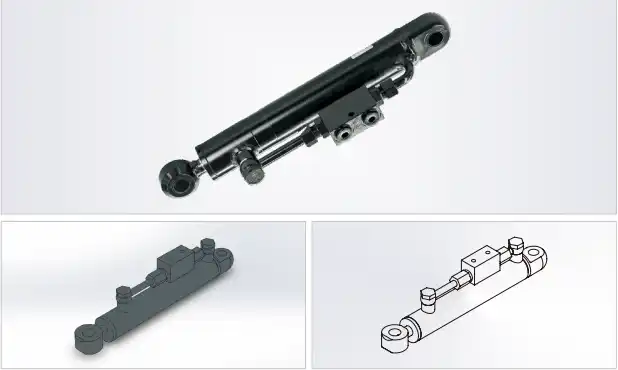
The hook lift body lock cylinder (model HCYY11112013) is the smallest cylinder in a hooklift truck’s hydraulic circuit, but don’t let that fool you — it’s arguably the most critical safety component on the entire vehicle. Its one job: lock the body firmly against the subframe once the container or skip bin has been lifted and loaded. No lock, no road-legal operation. Simple as that.
Unlike the tilt or telescopic cylinders that do the heavy lifting during loading cycles, the body latch cylinder works at the end of the sequence — extending a relatively short 200 mm stroke to engage a mechanical lock pin or latch bracket. It stays pressurized (or mechanically latched, depending on system design) for the entire road transit. That means sealing integrity, dimensional accuracy, and consistent pressure-holding capacity under vibration are non-negotiable.
At 4.2 kg and a compact bore of Φ40 mm, this hydraulic body latch cylinder is designed to fit within the tight envelope of a hooklift subframe without compromising structural access or maintenance clearance.
Technical Specifications — HCYY11112013 Body Lock Cylinder
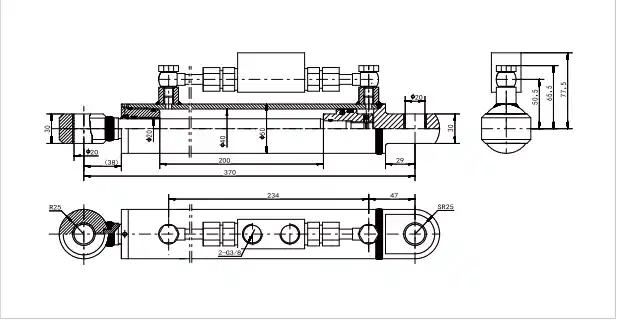
| Parameter | Value | What It Means in Practice |
|---|---|---|
| Model | HCYY11112013 | Hook lift body lock series |
| Bore × Rod × Stroke | Φ40 × Φ20 × 200 mm | Compact geometry for tight subframe mounting |
| Working Pressure | 30 MPa | Rated for full hooklift system circuit pressure |
| Max Withstand Pressure | 37 MPa | 23% overpressure safety margin above rated |
| Stroke (Trip) | 200 mm | Sufficient travel for latch engagement and retraction |
| Installation Distance | 370 mm | Center-to-center mounting span (retracted) |
| Weight | 4.2 kg | Minimal unsprung mass addition to the subframe |
Why a 30 MPa Locking Cylinder with a 23% Safety Margin Isn’t Overkill
You might wonder: if the body lock cylinder only extends 200 mm and weighs 4.2 kg, why does it need to be rated at 30 MPa — the same pressure as the main tilt and telescopic cylinders? The answer is hydraulic system architecture. Hooklift circuits almost universally run a common working pressure across all actuators. The control valve diverts flow to each cylinder in sequence; the body lock cylinder sits on the same high-pressure line as everything else.
The 37 MPa maximum withstand pressure — 23% above the rated working pressure — provides a calculated safety margin that absorbs pressure spikes caused by cold hydraulic fluid (higher viscosity = higher transient pressure at valve opening), load-induced shocks during transit, and any momentary system anomalies before the relief valve has time to respond. Specifying a lower-rated cylinder on this position to cut costs is a well-known field maintenance mistake that leads to seal extrusion and unexpected unlocking events.
The Φ40 mm bore delivers a push force of approximately 37.7 kN at 30 MPa — more than enough to overcome any mechanical resistance in a properly maintained latch bracket, including contaminated or slightly misaligned pins that are common in real-world waste-management and construction applications.
Where This Hydraulic Locking Cylinder for Hooklift Body Is Used
The HCYY11112013 is a direct-fit replacement or OEM-spec component for the body lock position on hooklift (skip loader) trucks operating in:
- Municipal waste and recycling fleets — where daily load-unload cycles accumulate fast and seal wear is the primary failure mode
- Construction and demolition skip hire — mixed aggregates and unpredictable loading heights put the body lock under asymmetric stress
- Mining and quarrying support vehicles — where road-surface vibration during transit demands consistent latch hold-force
- Agricultural bulk transport — grain, silage, or fertilizer containers that can shift during cornering if the body lock isn’t engaged properly
- OEM hooklift system builders — integrators specifying a proven, dimensionally consistent lock cylinder across multiple truck platforms
Construction, Sealing, and Serviceability
Cylinder Barrel
Seamless precision-honed steel tube, ID surface roughness Ra ≤ 0.4 μm for extended seal life and low stick-slip at low speeds.
Piston Rod
Φ20 mm chrome-plated rod, hard chrome thickness ≥ 20 μm, resists corrosion from road salt, wash-down fluids, and standing water on skip sites.
Seal Package
Polyurethane (PU) piston seals and a dust wiper at the rod end, rated for mineral hydraulic oil (HM/HV grades) and a temperature range of −20 °C to +80 °C.
End Connections
Threaded or clevis-pin ends (specify at order), dimensioned to OEM hooklift subframe mounting standards for direct bolt-in replacement.
Hydraulic Cylinder Mounting Position — Hooklift Truck System
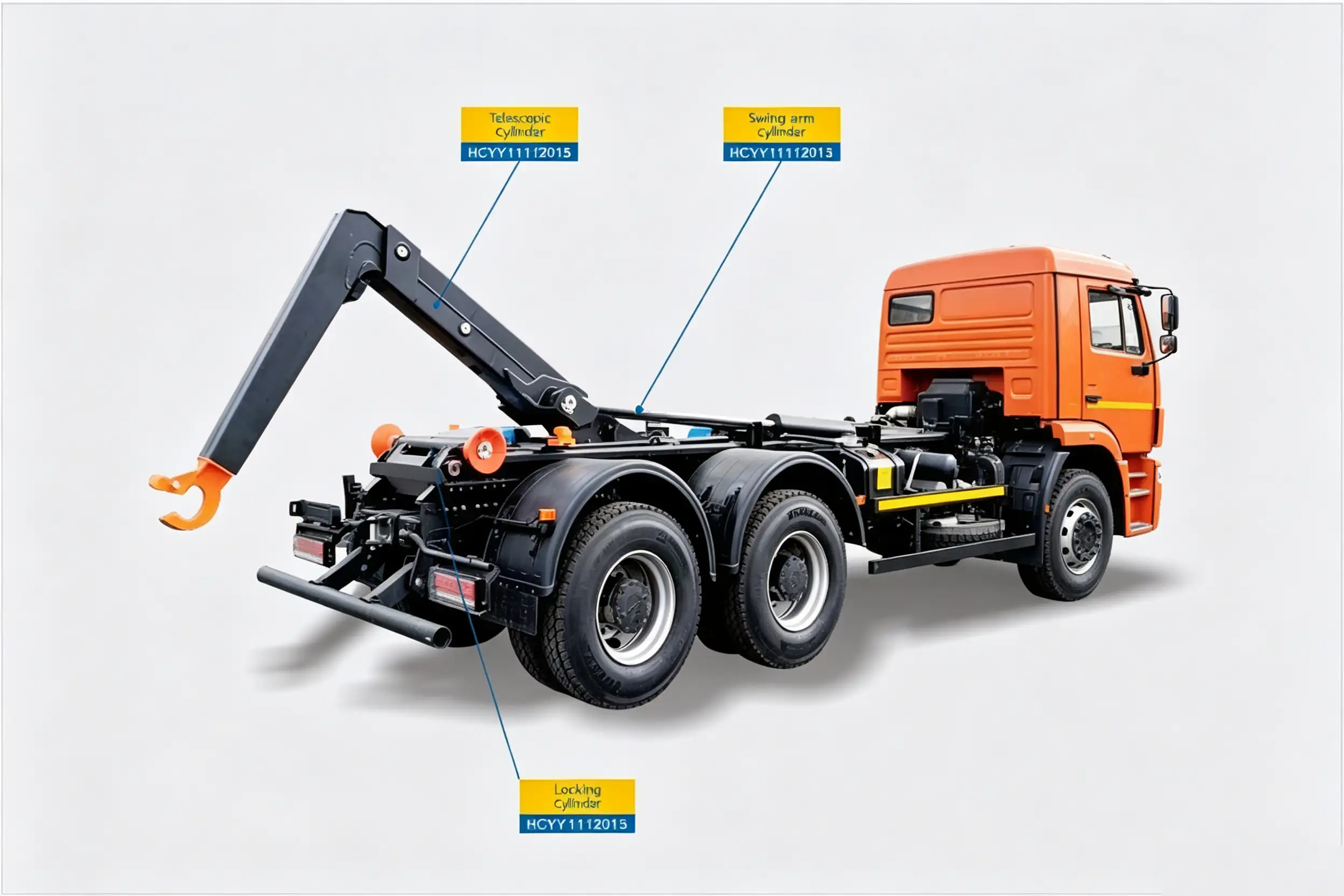
The body lock cylinder engages after the load cycle — securing the skip or container body for road transport.
Installation Notes for the Hook Lift Body Lock Hydraulic Cylinder
The 370 mm installation distance (center-to-center, retracted) is the critical dimension when replacing a body lock cylinder. Measure your existing unit before ordering — hooklift subframe designs from different manufacturers vary, and a 5 mm difference in mounting span can mean drilling new pivot holes. Key installation points:
- Ensure port alignment is correct before tightening hydraulic fittings — a twisted hose causes high-cycle fatigue at the crimp.
- Bleed the cylinder by cycling it 3–5 times before loading to evacuate entrapped air, which causes spongy response and potential water hammer on the first lock engagement.
- Torque pivot pin retaining hardware to OEM specifications — under-torqued pins walk out; over-torqued pins distort the eye bore and cause binding.
- Inspect the latch bracket contact surfaces for wear each time the cylinder is replaced — a worn bracket seat reduces effective lock force regardless of cylinder specification.
Common Questions — Hook Lift Body Lock Cylinder
Can I use a generic small-bore hydraulic cylinder as a substitute?
Technically possible, but not recommended. The body lock position requires a specific installation distance, end-connection geometry, and pressure rating. A generic cylinder with mismatched dimensions will either not reach the latch bracket fully or generate excessive side-loading on the pivot pins, accelerating wear on both the cylinder and the subframe.
How often should the body lock cylinder be replaced?
Seal life depends heavily on operating conditions. In typical municipal waste operations (3–6 load cycles per day), expect a service inspection at 12 months and seal replacement at 24–36 months. High-cycle quarry applications may require annual seal replacement. Replace the entire cylinder if the rod shows pitting deeper than 0.1 mm or any chrome delamination.
Is the HCYY11112013 available with a position sensor?
Yes — contact us for sensor-ready variants with a magnetic piston and external reed switch or Hall-effect sensor channel for body-locked status feedback in PLC-controlled hooklift systems. This is increasingly specified on European market trucks for fleet telematics integration.
Ready to Order or Need a Technical Drawing?
We supply the HCYY11112013 hook lift body lock cylinder to fleet operators, truck builders, and hydraulic system integrators across North America, Europe, and Australia. Bulk pricing, custom end connections, and full dimensional drawings are available on request.
Model: HCYY11112013 · Φ40×Φ20×200 · 30 MPa / 37 MPa · 200 mm stroke · 370 mm installation distance · 4.2 kg