
Sourcing a non-standard worm gearbox for the first time is not difficult — but it is different from buying a catalog unit. The catalog purchase follows a known process: find the frame size, confirm the ratio, submit a purchase order. The non-standard purchase requires the buyer to supply information that the manufacturer uses to engineer the unit from scratch, then manage a development cycle that includes drawing approval, first article inspection, and a go/no-go decision before production begins.
Engineers and procurement teams who go through this process unprepared lose time at every stage: incomplete enquiries generate unnecessary back-and-forth; inadequate drawing approval processes lead to dimensional surprises on arrival; missing quality documentation requirements delay commissioning and create audit problems. None of these delays are inherent to custom gearbox sourcing — they are the product of a poorly structured specification and sourcing process.
This guide covers the complete process from initial requirement definition through to long-term supply management — with practical checklists, documentation templates, and supplier evaluation criteria drawn from EPG Canada’s experience handling non-standard worm gearbox projects across a wide range of industries. It is intended as a working reference for engineers and procurement managers at OEM machine builders, system integrators, and industrial end users.
Guide Contents
1. The Non-Standard Worm Gearbox Supply Chain: What to Expect
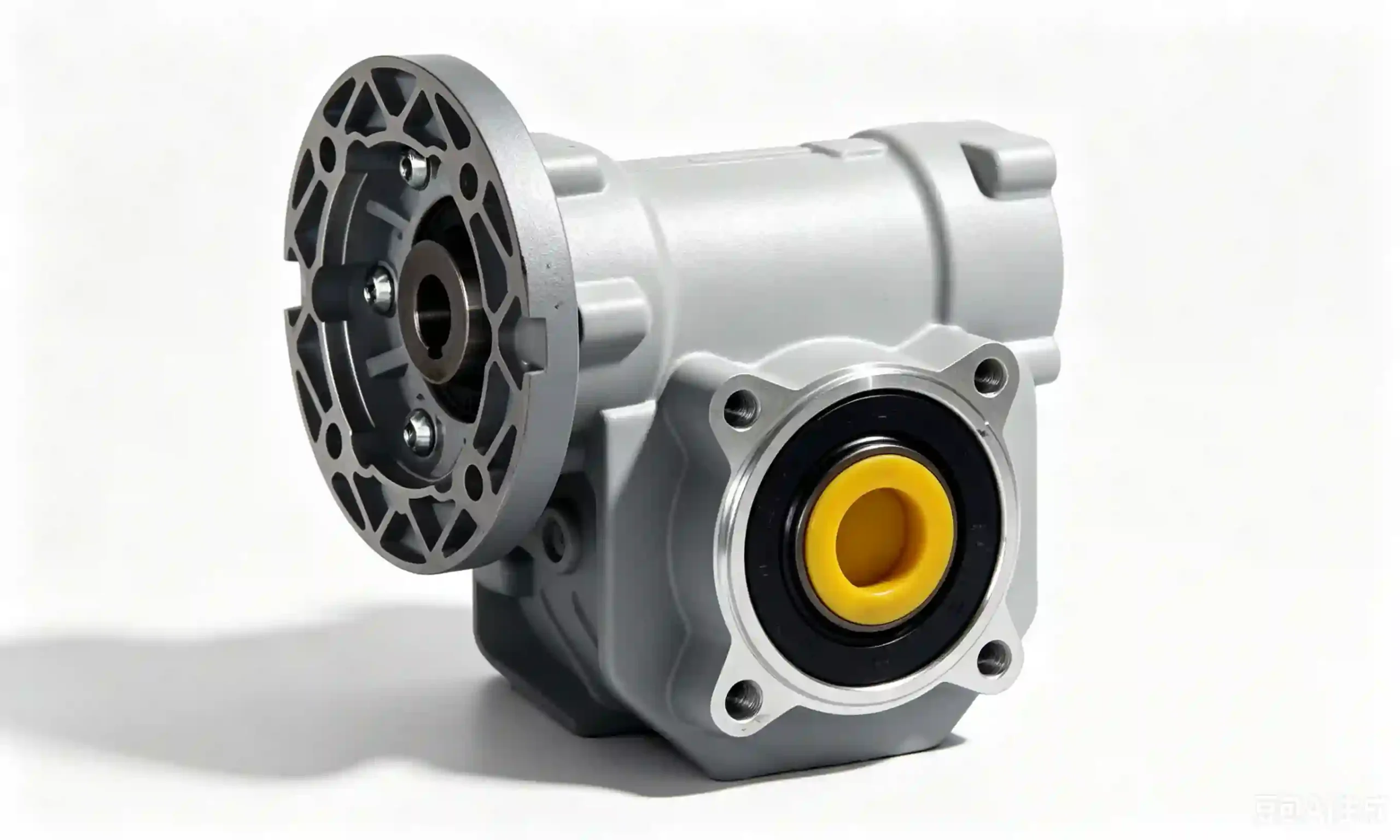
The non-standard gearbox supply chain has five stages, each with a specific deliverable and a defined approval step before the next stage begins. Understanding the sequence before engaging a supplier sets accurate expectations for timeline and cost — and prevents the most common cause of project delays, which is a buyer who expects catalog lead times on a custom engineered product.
| Stage | Activity | Deliverable from Supplier | Buyer Action Required | Typical Duration |
|---|---|---|---|---|
| 1 | Enquiry & Feasibility | Feasibility confirmation, clarifying questions, indicative pricing | Submit complete specification (see Section 2) | 24–48 h |
| 2 | Technical Proposal | Confirmed specification, preliminary 2D drawing, formal quotation with lead time | Review drawing; confirm or request revision; issue purchase order | 3–7 days |
| 3 | Drawing Approval | Final production drawing for buyer approval signature | Sign and return approved drawing — production does not begin until this step is complete | 1–5 days (buyer-controlled) |
| 4 | Production & First Article | First article unit(s) with inspection report, followed by production batch | Inspect first article against drawing and specification; issue go/no-go | 2–10 weeks (complexity-dependent) |
| 5 | Ongoing Supply | Repeat orders at approved specification; retained tooling and drawings | Issue repeat POs referencing approved drawing number and specification | Shorter lead time on repeats |
The most common cause of project delay: the buyer does not return the approved drawing promptly at Stage 3. Production cannot begin until the drawing is signed — a drawing approval that sits unsigned for two weeks is two weeks added to the delivery schedule. Assign a named technical approver and a 3-business-day turnaround commitment before placing the order.
2. Building Your Technical Specification Document
The specification document is the single most important input to the non-standard gearbox process. Its completeness determines the accuracy of the quote, the speed of the drawing approval cycle, and the probability that the first article passes inspection without rework. Use the checklist below to build yours — any item marked Mandatory must be provided before a binding technical proposal can be issued.
3. Drawing and Tolerance Requirements
A technical drawing is the legally binding specification that governs what the manufacturer produces and what the buyer accepts or rejects at inspection. The quality of the drawing determines the quality of the product — ambiguous drawings produce ambiguous results.
What the Supplier’s Drawing Must Show
- Overall envelope dimensions with tolerances
- Mounting face dimensions and bolt-hole pattern with position tolerances
- Output shaft diameter, length, keyway/spline with tolerances and surface finish
- Input shaft or motor flange dimensions
- Centre distance (toleranced to appropriate gear grade)
- Oil fill, drain, and vent plug positions
- Weight (approximate)
- Material callouts for housing and gear pair
- Surface treatment and paint specification
- IP rating achieved
- Drawing revision number and approval block
Tolerance Standards to Reference
- General tolerances: ISO 2768-m (medium) or ISO 2768-f (fine) for machined dimensions
- Shaft diameters: ISO h6 (output shaft) or k6 for interference fits
- Bore (hollow output): ISO H7 for keyed bore
- Keyways: DIN 6885 (metric) or ASME B17.1 (inch)
- Gear pair accuracy: GB/T 10089 grade 8 minimum; grade 6 for precision applications
- Surface finish: Ra 1.6 μm on shaft bearing surfaces; Ra 3.2 μm on machined flanges
- Flatness: 0.02–0.05 mm on mounting faces (application-dependent)
- Thread standard: State ISO metric or ASME unified explicitly
Drawing format: Provide drawings in PDF for approval and DXF/DWG or STEP for dimensional measurement. If you are replacing an existing gearbox, a dimensioned sketch — even hand-drawn with key measurements clearly annotated — is sufficient to begin the quoting process. The supplier will produce the formal drawing from your sketch and submit it for your approval before production.
4. Evaluating Supplier Capability for Non-Standard Work
Not all gearbox suppliers have the capability to deliver non-standard units. A supplier with only catalog experience will struggle with the engineering, drawing, and quality documentation requirements of a custom specification. Use the following criteria to pre-qualify suppliers before requesting a formal quotation.
| Evaluation Criterion | Good Response (Capable Supplier) | Red Flag |
|---|---|---|
| Response to enquiry | Technical questions within 48 h; asks for clarification on under-specified parameters | Quotes a catalog price without acknowledging non-standard aspects; no technical questions |
| Drawing capability | Provides 2D dimensioned drawing for approval before production; states drawing standard used | No drawing offered; starts production from verbal or email description only |
| First article inspection | Offers FAI with dimensional inspection report as standard; describes inspection methodology | No mention of first article; ships full batch without prior buyer approval |
| Specification retention | States that approved drawing and tooling will be held for repeat orders; describes record retention policy | No mention of what happens after first delivery — repeat orders may require re-quotation from scratch |
| Quality system | ISO 9001 certified or credible quality system description; can provide material and inspection certificates | No quality certification; unable to provide material traceability documentation |
| Lead time transparency | Provides lead time breakdown by stage (engineering, raw material, machining, assembly); states conditions | Single lead time figure given without breakdown; no conditions stated for what drives the timeline |
5. Understanding Non-Standard Gearbox Pricing
Non-standard gearbox pricing is driven by four cost components. Understanding each one allows buyers to make informed decisions about where to invest specification effort versus where to accept standard options.
① Engineering Cost
Design time, drawing creation, gear pair calculation, and drawing approval cycle. Typically a fixed charge per specification — amortised over the batch quantity. Higher on first orders; zero on approved repeats.
② Material Premium
Stainless steel housing costs 3–5× cast iron at the same frame size. Special alloy worm shafts, food-grade seals, and PTFE lip seals each carry material premiums. Specify standard materials where the environment permits.
③ Tooling Cost
New housing castings require a pattern tool. For non-standard centre distances or housing forms, the pattern cost must be paid once. On low volumes, tooling is the dominant cost driver — it usually becomes economically viable above 10–20 units per year.
④ Volume Effect
Setup costs (engineering, tooling) are fixed — the unit cost falls significantly as batch size increases. Prototypes typically cost 2–3× the production unit price. Committing to a minimum annual volume early in the negotiation is the most effective way to reduce unit pricing.
Cost Reduction Strategies (Without Compromising Quality)
- Accept a standard centre distance and modify only the shaft configuration — avoids housing tooling cost
- Use a standard housing with a custom output shaft — machined shafts are far cheaper than new casting tooling
- Specify standard cast iron or aluminum housing where corrosion resistance is needed but stainless steel is not — a good coating system is far cheaper than SS316 housing
- Commit to annual volume upfront — even a soft commitment to 20–50 units/year typically moves the unit price to production bracket pricing
- Use a VFD to fine-tune output speed from a standard ratio rather than specifying a custom ratio — eliminates the custom gear pair cost in most cases
6. Prototype and First Article Strategy
The first article inspection is the critical quality gate in the non-standard supply chain. It is the point where dimensional compliance, material compliance, and functional performance are confirmed before the full production batch is committed. A well-structured first article process prevents costly rework on the batch; a poorly structured one allows defects to propagate to all units.
When to Request a Prototype vs Jump to Production
Request a prototype first when:
- First order with a new supplier
- New housing casting or custom gear pair
- Safety-critical or regulatory-certified application
- Complex dimensional interface with proprietary machine components
- Production batch quantity is large (20+ units)
Skip the prototype when:
- Minor shaft or surface treatment modification to a catalog housing
- Established supplier with a track record on similar modifications
- Small batch (1–3 units) where full batch IS the prototype
First Article Inspection Checklist
- Verify all key dimensions against approved drawing
- Confirm output shaft diameter, keyway width and depth, shaft runout
- Confirm mounting flange bolt-hole pattern and position
- Check housing material — visual and, if required, PMI (positive material identification)
- Confirm paint colour and coating thickness
- Test IP rating (spray test or submersion as applicable)
- Measure backlash (if specified)
- Run the gearbox under no-load at rated speed for 30 minutes — check for oil seepage, unusual noise, or excessive temperature rise
- Verify nameplate data matches order specification
- Confirm all required quality documents are present and correct
7. Quality Documentation: What to Specify and When
Quality documentation requirements must be specified before the purchase order is placed — not requested after delivery when most documentation is either no longer available or never existed. The table below maps common applications to their documentation requirements.
| Document | General Industrial | Food / Pharma | ATEX / Hazardous Area | Defense / Aerospace |
|---|---|---|---|---|
| Dimensional inspection report | On request | Required | Required | Required (FAIR) |
| Material test certificates (EN 10204 3.1) | On request | On request | Required | Required |
| Backlash measurement certificate | On request | N/A typically | On request | Required |
| Paint adhesion / coating thickness report | On request | On request | Required | Required |
| NSF H1 lubricant certificate | N/A | Required | N/A | N/A |
| ATEX / IECEx certification | N/A | N/A | Required | N/A |
| CE Declaration of Conformity | On request | On request | Required | N/A (MIL-SPEC) |
| Test run report (no-load run data) | On request | On request | Required | Required |
8. Acceptance Inspection at Goods Receipt
Receiving inspection of a non-standard gearbox should be more thorough than catalog unit inspection — this is a custom unit, and the first opportunity to identify dimensional or specification non-conformances before the gearbox is installed in a machine where discovery costs more.
Minimum Receiving Inspection (All Non-Standard Units)
- ☐ Nameplate matches order specification
- ☐ Output shaft diameter checked (go/no-go gauge or micrometer)
- ☐ Keyway dimensions checked
- ☐ Mounting bolt pattern checked against drawing
- ☐ Oil fill plug present and correctly positioned for mounting orientation
- ☐ Breather plug present (where specified)
- ☐ No visible oil leakage at seals (visual inspection)
- ☐ Housing paint colour and condition
- ☐ Quality documents present and match unit serial number
Extended Inspection (Critical Applications)
- ☐ Full dimensional inspection against drawing (all callouts)
- ☐ Shaft runout measurement at output shaft
- ☐ Backlash measurement (if specified)
- ☐ Coating thickness measurement
- ☐ PMI (positive material identification) on housing if SS specified
- ☐ IP ingress protection test (spray or submersion)
- ☐ No-load run test at rated input speed (30 min minimum)
- ☐ Oil temperature and noise level recorded during run test
9. Long-Term Supply Management
Once a non-standard gearbox specification is approved and the first batch is accepted, the ongoing supply management is simpler than the initial development — but requires active management to prevent common long-term problems.
Keep a Controlled Drawing
Maintain a copy of the approved production drawing under document control. Never request changes verbally — all specification changes must be issued as a drawing revision and re-approved before production.
Confirm Tooling Retention
Confirm with the supplier, in writing, that housing tooling and gear pair tooling will be retained for the agreed period. For ongoing annual programs, confirm tool life and whether re-tooling costs apply after a certain number of cycles or years.
Carry Safety Stock
Non-standard units are not stocked by distributors. If a machine-down failure requires an immediate replacement, the lead time is the same as a new order. Carry at least 1–2 units of safety stock for production-critical applications.
Annual Supplier Review
Review delivery performance, quality record, and component pricing annually. Confirm that the specification is still current and that no material substitutions have been made without notification. Request drawing re-confirmation if more than 2 years have passed without a re-order.
Document the Service History
Record operating hours at oil change, any failures, and the failure mode for each custom gearbox unit in service. Field failure data is the most valuable specification improvement input available — and informs both service interval decisions and any future specification upgrades.
Ready to Start Your Non-Standard Gearbox Project?
EPG Canada responds to all non-standard worm gearbox enquiries within 48 hours with a feasibility assessment and indicative pricing. Use the specification checklist in Section 2 to structure your enquiry and we will handle the rest.
Email your specification, drawings, and quantity to our team. A photo of an existing nameplate or a hand-drawn sketch is a perfectly valid starting point.